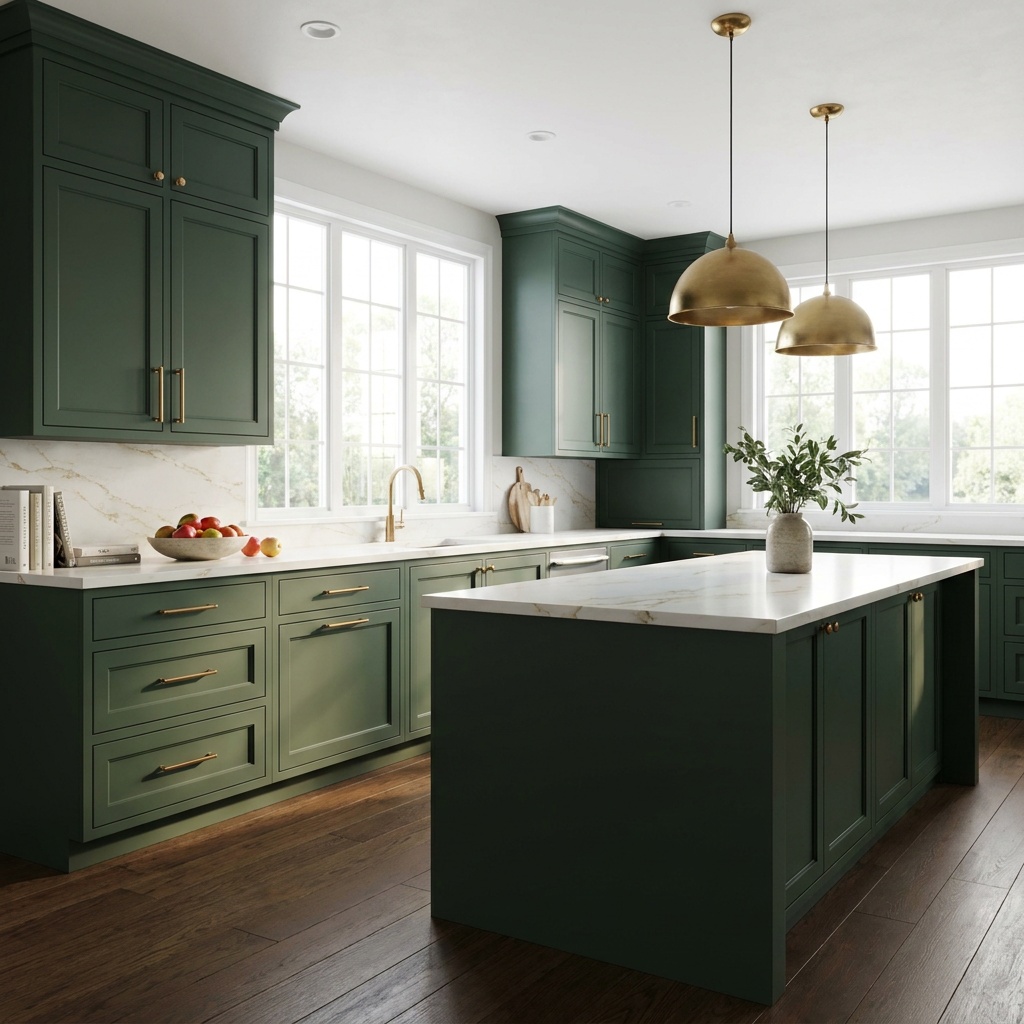
Brass kitchen hardware comes in two basic types: living finishes that change color over time, and sealed finishes that stay put. Unlacquered (living) brass has no protective coat, so it reacts to air, moisture and skin oils. In a working kitchen, the most-used pulls show a visible shift within one to three weeks, and the whole set settles into a soft, uneven bronze over six to eighteen months. Lacquered brass carries a clear coat that holds the original color, but that coat typically yellows or chips somewhere around seven to ten years, and a chipped spot ages on its own. A third group, PVD (physical vapor deposition) brass, bonds the color at a molecular level and essentially never changes. “Aged” or “antique” brass is a factory-darkened look and can be either living or sealed underneath. The right pick depends on one question: do you want your hardware to record how you use the kitchen, or to look the same on year ten as on day one?
The three kinds of brass finish, and how each one behaves
The name on the box (“satin brass,” “champagne bronze,” “vintage brass”) describes color and sheen. How it ages depends on what sits on top of the metal, if anything.
Unlacquered brass: the living finish
Unlacquered brass is solid brass with nothing over it. The copper in the alloy oxidizes on contact with air, humidity and the oils on your hands, so the surface darkens from bright yellow toward honey, then toward a warm brown with darker edges and recesses. It never rusts and it never fails; it only changes.
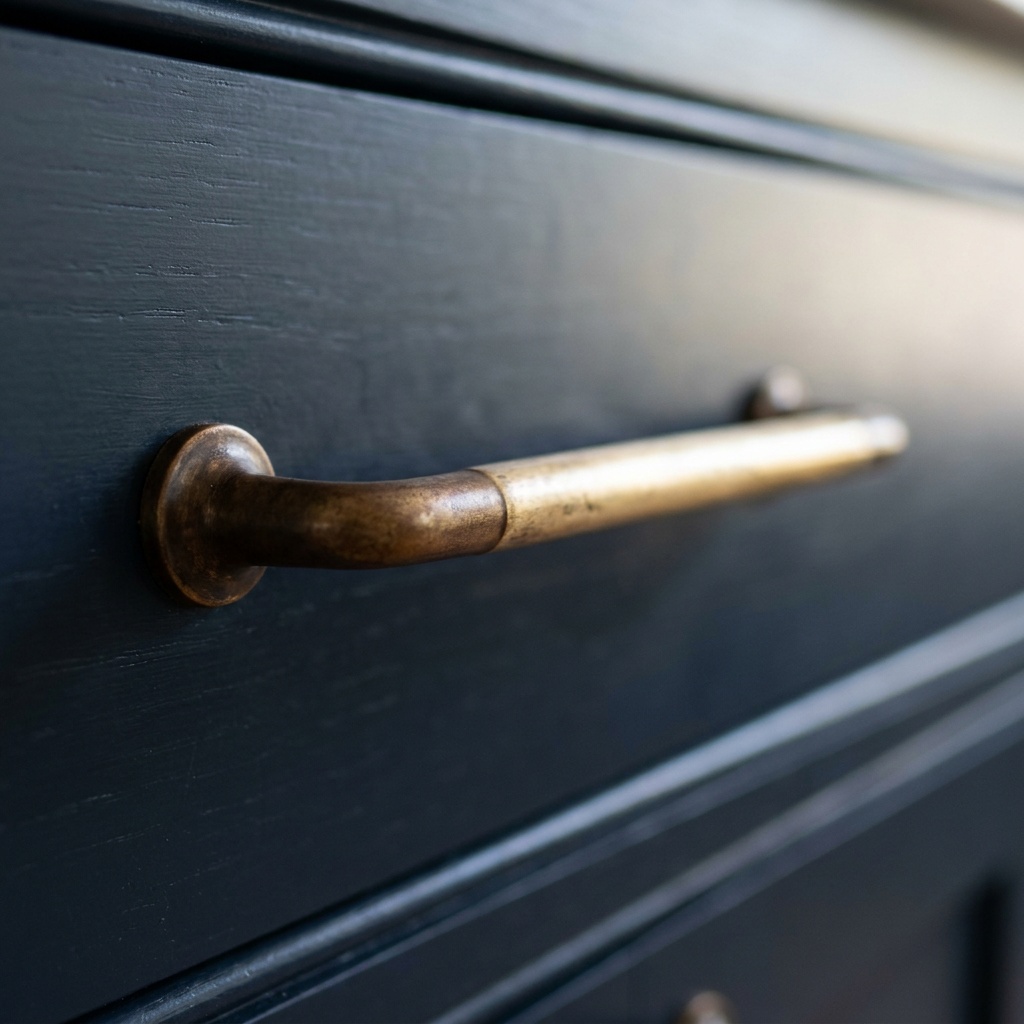
Two things set the speed. The first is touch: the pull on the snack drawer darkens faster than the pull on the drawer of sheet pans you open twice a year, so a living set always ends up slightly uneven, which is exactly the point for the people who choose it. The second is moisture. A North Atlanta summer runs humid even indoors, and hardware next to a sink, dishwasher or range sees steam and splashes daily. Expect the sink-base and dishwasher-adjacent pulls to lead the rest of the kitchen.
If you change your mind, a brass polish brings it back to bright in a few minutes per piece, and it starts aging again the next day.
Lacquered brass: the sealed finish
Lacquered brass is the same metal with a clear protective coating baked on. Out of the box it looks bright and consistent, and it stays that way through daily cleaning with a soft cloth and mild soap. The trade-off is the life of the coat. Abrasive cleaners, rings and years of hands wear through the lacquer first on the leading edge of a pull, and once air reaches the metal there, that one spot begins to patina while the rest stays bright. Most lacquers also take on a faint yellow cast with age.
PVD brass: the permanent finish
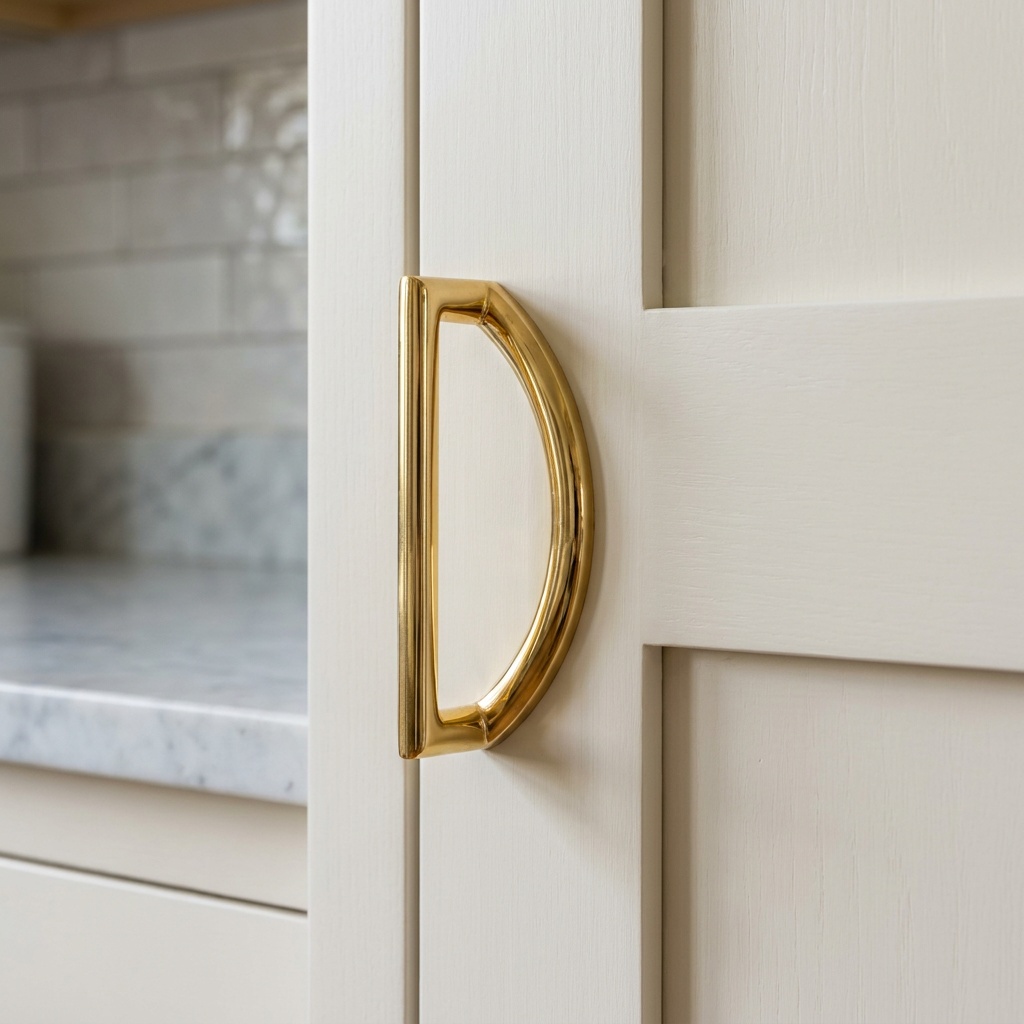
PVD is a vacuum-chamber process that bonds a thin, very hard brass-colored layer to the base metal. It resists scratches, cleaning chemicals and moisture far better than a lacquer, and the color will not shift. It is the right answer for anyone who wants the brass look without any maintenance or variation, and for hardware that lives in the hardest spots: a wet bar, a laundry room sink cabinet, or an outdoor kitchen on a covered porch. It reads crisper and more uniform than living brass, which suits modern and transitional kitchens.
Where “aged brass” fits
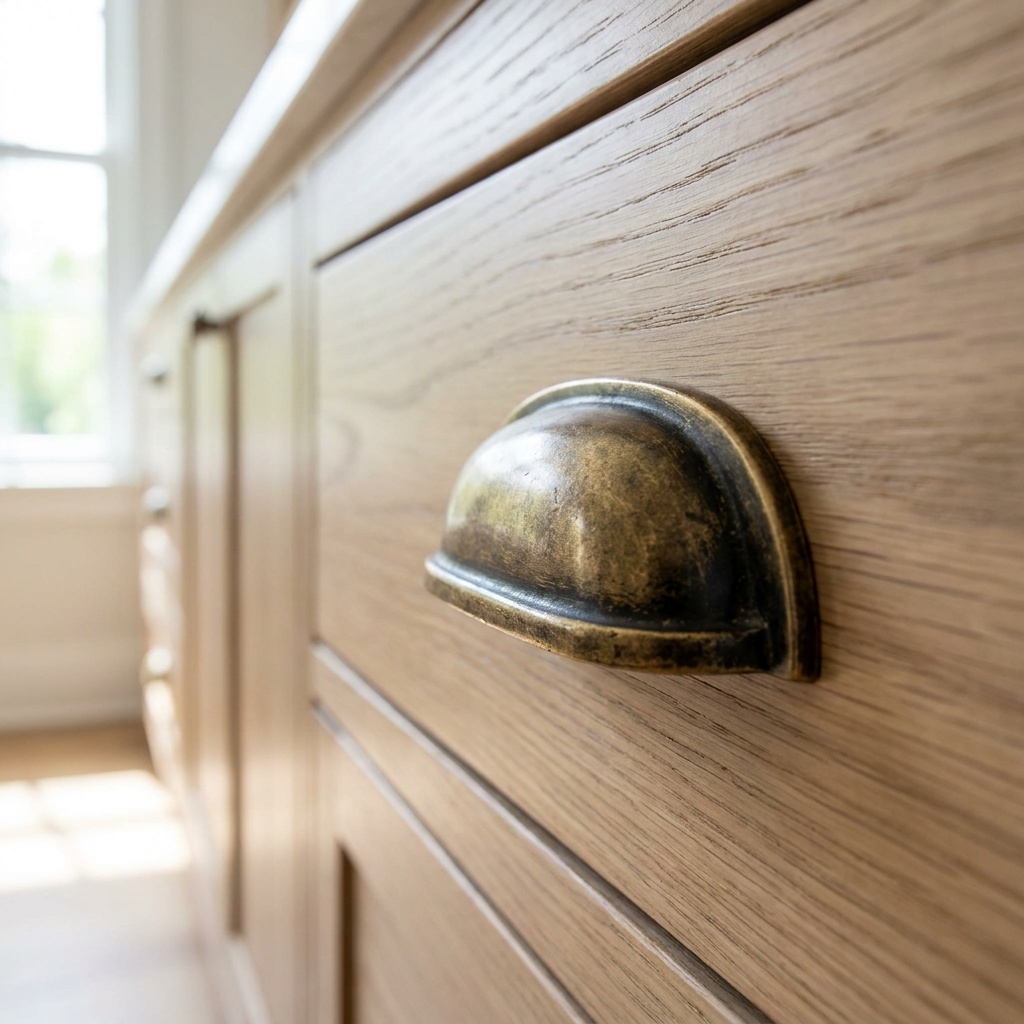
Aged, antique and vintage brass are color names, not separate technologies. The maker darkens the metal chemically so the hardware arrives looking like it has already spent a decade in an old house, often with deeper shading in the grooves. Some is then sealed to lock that look in; some is left living and keeps darkening, so ask which before you order.
Living vs. sealed brass at a glance
| Finish | How it changes | Care | Best match |
|---|---|---|---|
| Unlacquered (living) | Darkens to warm brown; most-touched pieces first; visible within weeks | Soap and water; polish only if you want it bright again | Traditional, English, farmhouse and collected kitchens |
| Lacquered | Stays bright until the coat wears, usually on the edges first | Soft cloth, mild soap, no abrasives | Anyone who wants bright brass now and is fine refreshing it later |
| PVD | Essentially none | Wipe clean; tolerates most cleaners | Modern and transitional kitchens, wet bars, outdoor kitchens |
| Aged / antique (pre-darkened) | Depends on whether it is sealed or left living underneath | Follows whichever base it has | Instant old-house character without waiting for it |
Where brass belongs, and where it does not
Brass is a warm metal, and it reads best against surfaces that let that warmth show. It does not need to go on every handle in the house to work. These pairings tend to look intentional from the first day.
- Painted cabinets in deep or muted colors. Navy, forest and olive green, deep blue-gray and charcoal all make brass glow.
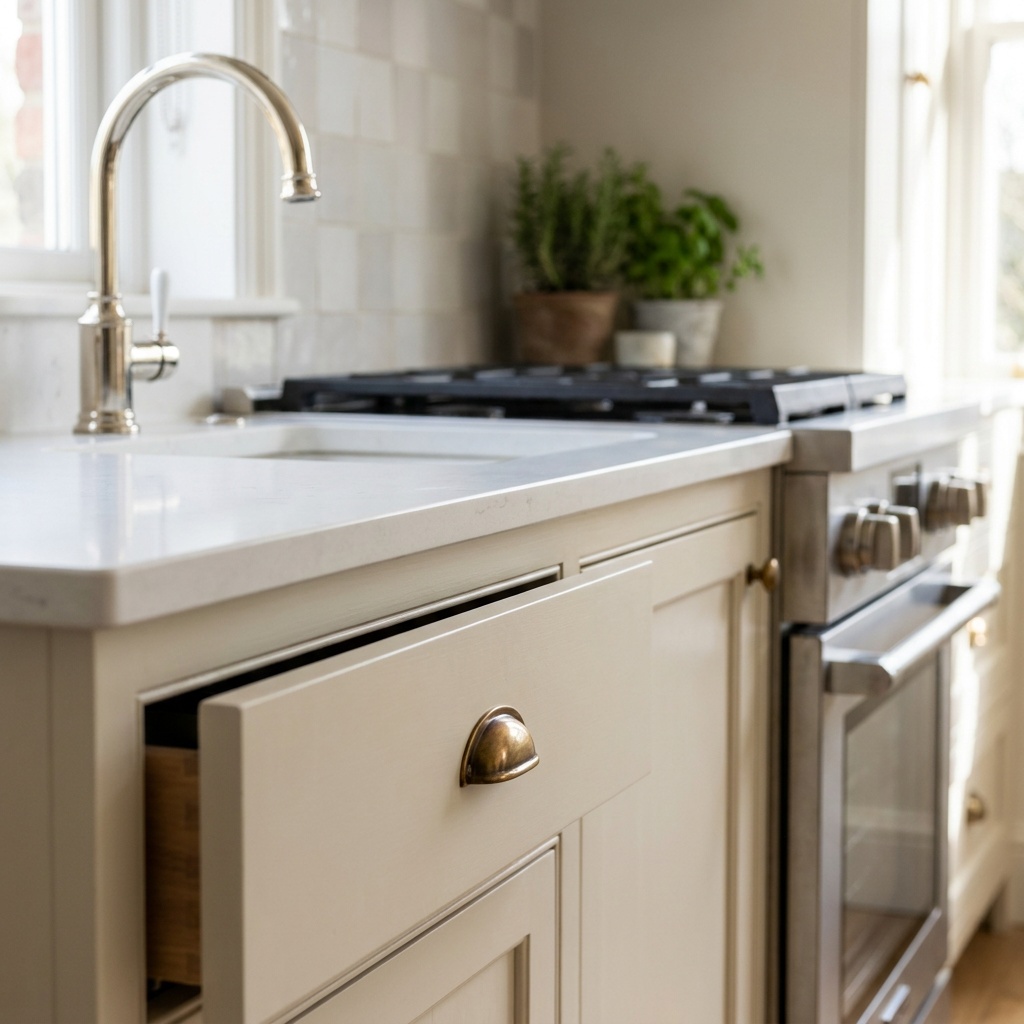
- Warm whites and creams. A soft ivory or cream cabinet and brass share the same yellow undertone, so the hardware looks related rather than stuck on. See our post on ivory kitchen cabinets.
- Natural and stained wood. White oak and walnut take brass well.
- Marble-look and veined stone. Brass picks up the warm tones in gold-veined quartz, quartzite and marble and ties hardware to the countertop.
Where it needs more thought:
- Bright, cool whites with gray stone. Brass can look warm and slightly out of key against a very blue-white cabinet and a cool gray top. A champagne or pale satin brass softens the jump; a deep aged brass makes it louder.
- Hardware that sits in water. A living-brass pull on a sink cabinet that gets dripped on daily will spot and streak faster than the rest of the room. Choose PVD there, or accept that it will be the darkest piece in the kitchen.
Mixing brass with other metals
Faucet, hood trim, lights, appliances and hardware all bring their own finish. A few rules make the mix look planned:
- Two metals, three at most. Brass with matte black, or brass with polished nickel, or brass with stainless appliances. Adding a fourth finish usually tips into clutter.
- Repeat each metal at least twice. If the pulls are brass, let the pendant lights or the hood band pick it up somewhere else in the room so the brass is not the only warm note.
- Group by job. One common approach: all cabinet hardware in one finish, all plumbing in another. The eye reads that as a system. Our sink guide covers the faucet and sink side of the pairing.
- Match the sheen, not just the color. A satin brass pull next to a satin nickel faucet feels calmer than a polished brass pull next to a matte black one, because the two finishes catch light the same way.
- Living and sealed brass in the same room will drift apart. If the faucet is lacquered or PVD and the pulls are unlacquered, they match on day one and diverge over the first year. That can be lovely, but it should be a choice.
Matching the finish to how you live
The best way to choose is to be honest about how you will feel when the hardware changes.
Choose living brass if you like things that look used and loved, you are drawn to old English and European kitchens, and the idea of the coffee-drawer pull being darker than the others makes you smile rather than reach for a polish.
Choose lacquered brass if you want bright, even brass now, you are comfortable with a gentle cleaning routine, and you expect to refresh the kitchen again in ten years or so anyway.
Choose PVD if you want brass that looks exactly the same for as long as you own the house, you have kids or a busy kitchen that gets hard use, or the hardware is going somewhere wet.
A sample beats any photo: put one pull in each finish on your actual cabinet door for two weeks and touch the living one daily.
Sizing and placement still matter more than finish
A beautiful finish cannot rescue a pull that is the wrong length or in the wrong spot. Our full guide to cabinet hardware sizing and placement walks through the one-third rule and the templates that keep a run of drawers aligned. If brass is part of a larger color plan, our kitchen color palettes post shows which cabinet colors carry it best.
Decide hardware early, alongside cabinet color and countertop. For a sense of how hardware fits into an overall project budget, see our kitchen remodel cost guide for Alpharetta. If you are planning a kitchen in Roswell, Milton or elsewhere in North Atlanta, we can bring finish samples to your home and hold them against your cabinets and stone. Start at our home page to see how we work, book a consultation, or call 404-640-2361.
Frequently asked questions
Does unlacquered brass cabinet hardware tarnish quickly?
It starts changing quickly but darkens slowly. In a busy kitchen, the pulls you touch most show a visible shift within one to three weeks, especially near the sink, dishwasher and range where moisture is highest. Reaching a deep, settled bronze usually takes six to eighteen months. Rarely used pieces lag behind, so a living set is always a little uneven. That variation is the look people choose it for. If you prefer it bright, a brass polish restores the original color in a few minutes per piece.
What is the difference between aged brass and satin brass?
Satin brass is a brushed, low-sheen finish in a fairly light, even brass color. Aged brass has been chemically darkened at the factory so it looks older, usually with deeper shading in the recesses and edges. Either one can be sealed with lacquer or PVD to hold its color, or left living so it keeps darkening. The color name tells you how it looks today; ask the maker whether it is sealed to know how it will look in a few years.
Can you mix brass hardware with stainless steel appliances?
Yes, and it is one of the most common pairings in new kitchens. The key is to make the mix look deliberate: keep to two or three metals in the room, repeat the brass somewhere else such as pendant lights or a hood band, and keep the sheen consistent. Stainless appliances read as a neutral, much like a dark or white cabinet, so brass cabinet pulls rarely clash with them when the rest of the room supports the warm metal.
Is PVD brass better than lacquered brass?
PVD is more durable. The color is bonded to the metal in a vacuum process, so it resists scratching, cleaning chemicals and moisture and does not yellow or peel. Lacquer is a clear coat that holds up well with gentle cleaning but usually wears on the edges after several years, and the worn spot ages on its own. PVD suits busy households, wet locations and anyone who wants the brass color permanently. Lacquered brass is a good fit if you want bright brass and do not mind refreshing it eventually.
Where should you not use unlacquered brass in a kitchen?
Living brass works almost anywhere, but it changes fastest and least evenly where it gets wet every day. Hardware on a sink base, beside a dishwasher, or at a wet bar will spot and darken ahead of the rest of the kitchen. If you want the room to age evenly, use PVD brass in those few spots and living brass everywhere else, or simply accept that those pieces will become the darkest in the set.