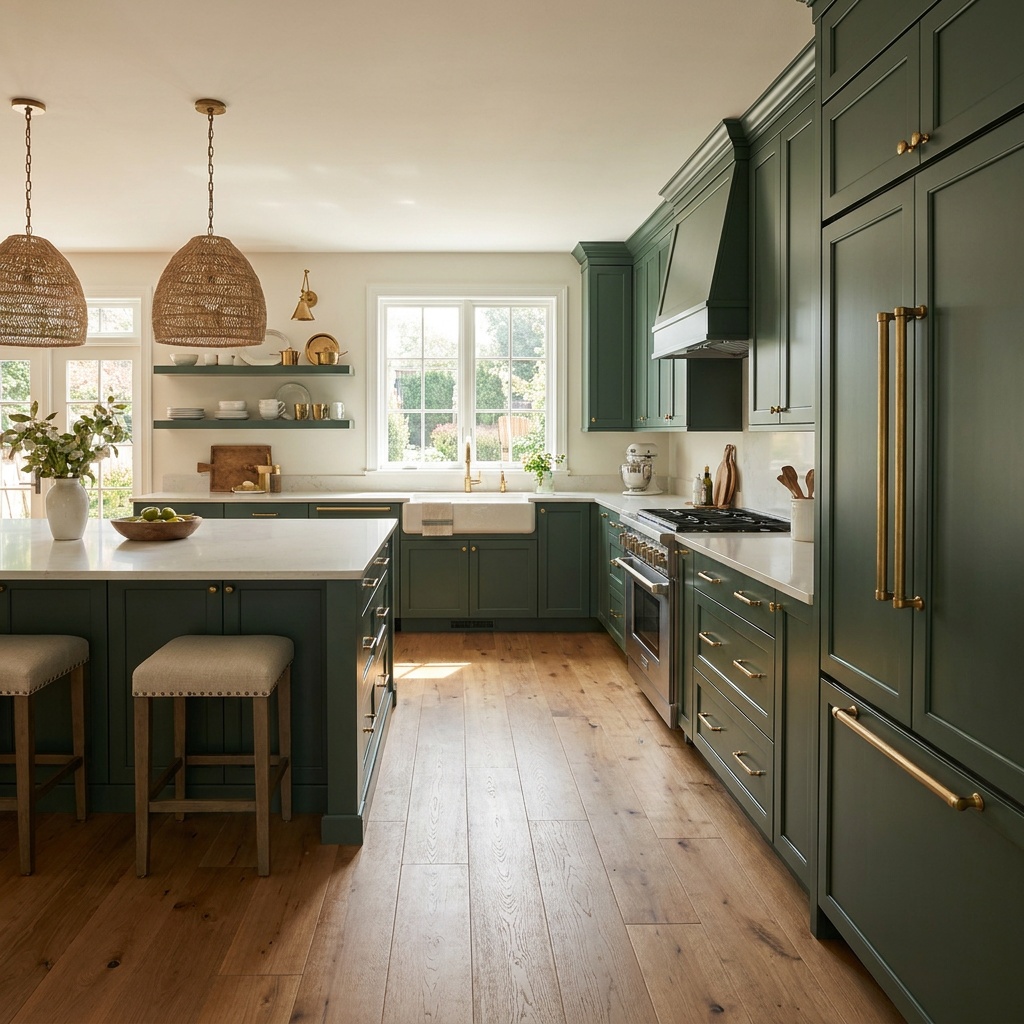
Kitchen cabinet hardware comes down to three decisions: knob or pull, how long, and where it sits. The most common convention is knobs on doors and pulls on drawers. Size a drawer pull so its overall length is roughly one third of the drawer front’s width, which in practice means a 96mm (about 3.75-inch) center-to-center pull on 12- to 15-inch drawers, 128mm (about 5 inches) on the 15- to 21-inch drawers most kitchens are full of, and 160mm to 224mm on 24- to 36-inch drawers. Place door knobs 2.5 to 3 inches in from the corner opposite the hinges, near the top on base cabinets and near the bottom on uppers. Center pulls on shallow drawers, and keep the deeper drawers below aligned in a row near their top edges. Paneled refrigerators and dishwashers take heavier appliance pulls, usually 12 to 18 inches center-to-center on a fridge. Get those rules right and the hardware reads as deliberate from across the room.
Knobs, bar pulls, cup pulls, and appliance pulls
Four kinds of hardware cover nearly every kitchen, and each one does a slightly different job in the hand.
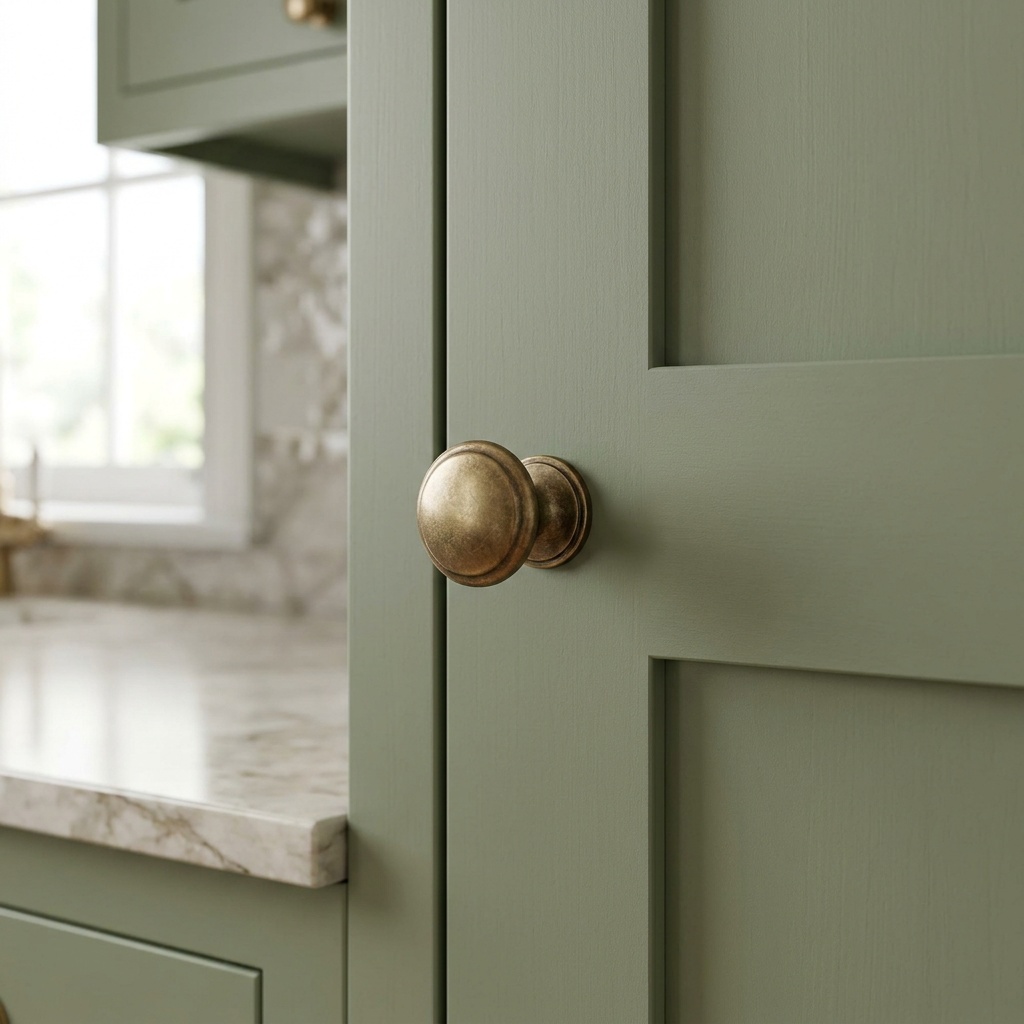
Knobs
A knob is a single point you pinch, usually 1 to 1.5 inches across, mounted with one screw. It is the natural choice for a hinged door, because opening a door only takes a light tug at the edge farthest from the hinge. Knobs keep a run of upper cabinets visually quiet and suit traditional and English-style kitchens.
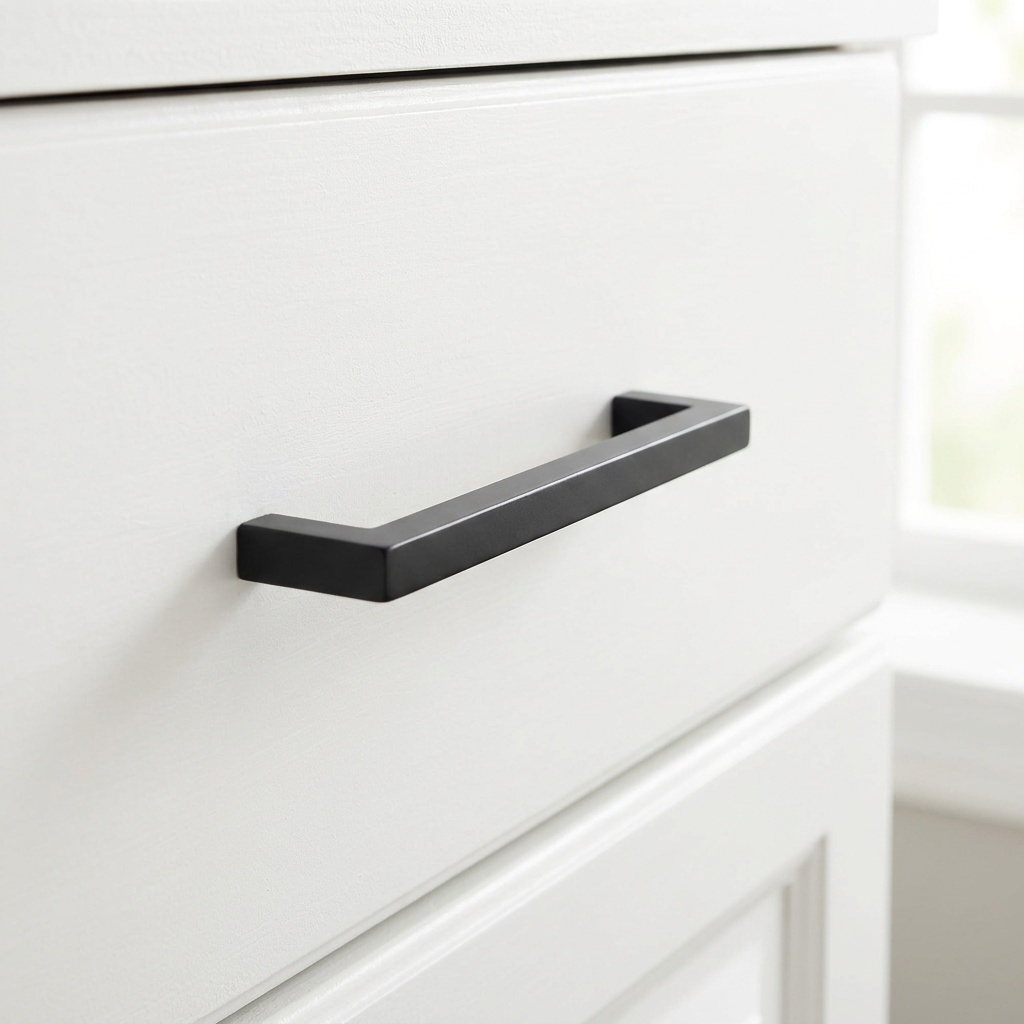
Bar and wire pulls
A pull mounts with two screws and gives your whole hand something to grip. That matters on drawers: a loaded 30-inch pot drawer can carry real weight, and a pull spreads the force across the drawer front instead of concentrating it at one screw. For anyone with limited grip strength, pulls are simply easier to use than knobs.
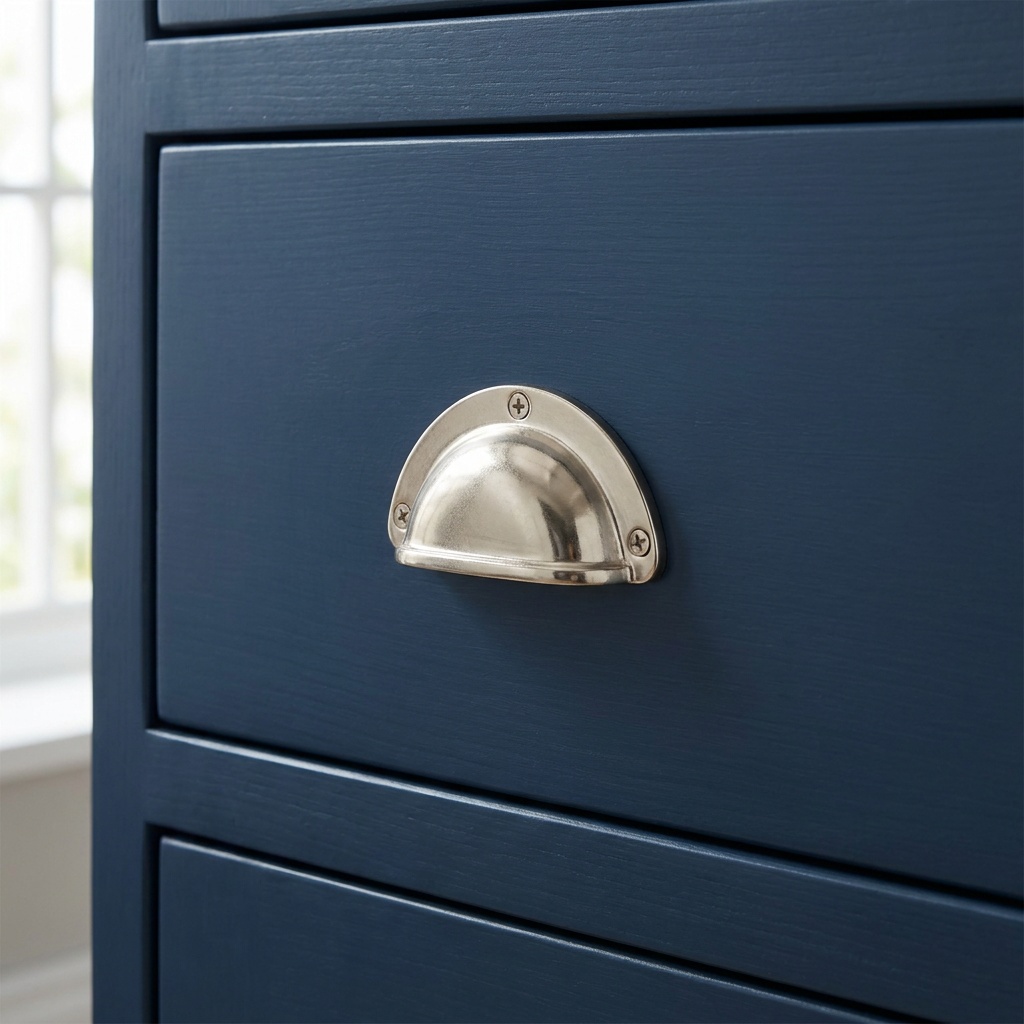
Cup pulls
A cup or bin pull is a half-shell your fingers hook up into from below. It belongs to drawers only, since it does not work turned sideways on a door, and it is a hallmark of English, cottage, and vintage-inspired kitchens. They pair naturally with knobs on the doors.
Appliance pulls
An appliance pull looks like an oversized bar pull but is built differently: thicker posts, a sturdier bar, and usually a set screw that locks it from the back. A refrigerator’s door gasket holds the door shut with surprising force, and a standard cabinet pull on a paneled fridge will loosen within months. If you are paneling the refrigerator, dishwasher, or freezer drawers, the appliance pull is a separate purchase from the cabinet hardware, not a longer version of it.
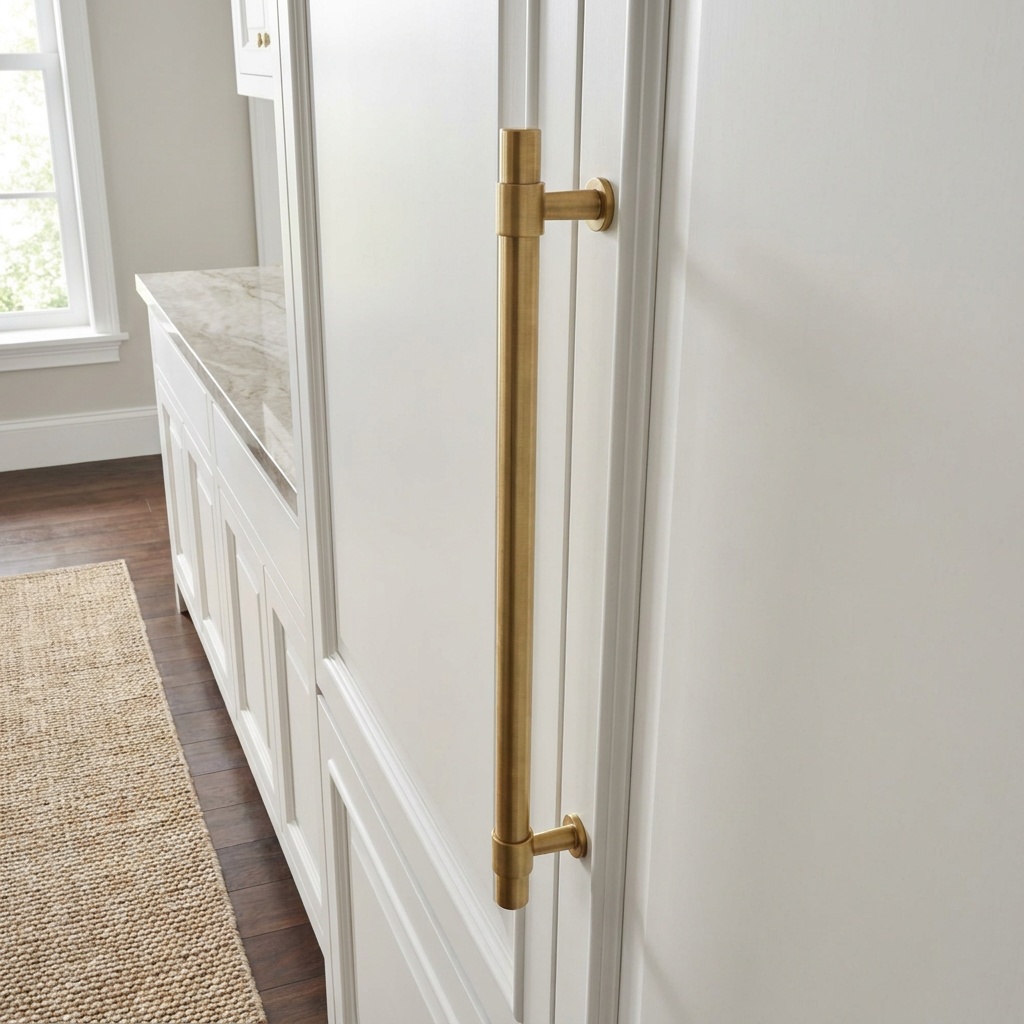
Sizing pulls to the drawer: the one-third rule
The one-third rule says a pull’s overall length should be about a third of the drawer’s width. It is a starting point, not a law: a 3-inch pull on a 36-inch drawer looks lost, and an 18-inch bar on a 12-inch drawer looks like a towel rail.
The number that actually matters when you buy is center-to-center, often written CC: the distance between the two screw holes, not the overall length of the bar. Most hardware now comes in metric centers, and the common sizes map to drawer widths like this:
| Drawer front width | Typical pull (center-to-center) | Approx. overall length | Notes |
|---|---|---|---|
| 9 to 12 inches | Knob, or 76mm / 3 inches | 3.5 to 4 inches | Narrow spice or utensil drawers; a knob often looks better here |
| 12 to 15 inches | 96mm (about 3.75 inches) | 4.5 to 5 inches | Small drawer banks |
| 15 to 21 inches | 128mm (about 5 inches) | 6 to 6.5 inches | The most common kitchen drawer size and the most common pull |
| 24 to 30 inches | 160mm to 192mm (6.25 to 7.5 inches) | 7.5 to 9 inches | Standard pot and pan drawers |
| 30 to 36 inches | 224mm to 305mm (8.75 to 12 inches) | 10 to 13 inches | Or two smaller pulls, about a third of the way in from each side |
| Paneled refrigerator | 12 to 18 inch appliance pull | 13 to 20 inches | Match the panel’s pre-drilled spacing if it has one |
You do not need a different pull for every drawer width; most kitchens look calmer with two sizes, standard and wide. On existing cabinets, measure the old holes before choosing a style, because a different center-to-center means filling holes, and on painted fronts that patch rarely disappears; our post on repainting kitchen cabinets covers why touch-ups show.
Knob or pull: choosing a convention
There are three conventions that work, and the mistake is not choosing one.
- Knobs on doors, pulls on drawers. The classic approach, and the one most people picture. It matches how each piece moves: a door swings and needs a point, a drawer slides and needs a grip.
- Pulls everywhere. One piece of hardware, mounted vertically on doors and horizontally on drawers, reads clean and contemporary.
- Knobs everywhere. Works in a small or highly traditional kitchen, especially with inset cabinetry. On wide drawers, use two knobs rather than one so the drawer does not rack as it opens.
Door style shapes the choice too. A Shaker door has a flat frame, the stile, that hardware sits on naturally. A slab door has no frame to anchor to, so long pulls or edge pulls tend to suit it better. Our guide to cabinet door styles walks through how each profile looks with hardware, and if you are weighing a kitchen of drawer bases rather than doors, drawers or doors changes the hardware count considerably.
Placement rules that make a kitchen look aligned
Doors
On base cabinet doors, set the knob or pull near the top corner opposite the hinges, typically 2.5 to 3 inches down from the top edge. On upper cabinet doors, mirror it to the bottom corner, the same distance up from the bottom edge, because that is the part of the door your hand actually reaches. Center the hardware on the stile, the vertical frame of the door, rather than splitting the difference between the frame and the panel.
Vertical pulls on doors follow the same logic: the end of the pull sits about 2.5 to 3 inches from the top of a base door or the bottom of an upper. Tall pantry doors are the exception; there, put the pull at a comfortable standing height, roughly 36 to 42 inches off the floor, rather than at the very top.
Drawers
On a shallow top drawer, center the pull both left to right and top to bottom. On the deeper drawers below, keep each pull centered left to right, and either center it vertically as well or set it near the top edge so the stack reads as one row. Whichever you choose, use it on every drawer bank in the kitchen, including the island.
Two pulls on one drawer start to make sense once a drawer passes about 30 to 36 inches. Place them roughly a third of the way in from each edge.
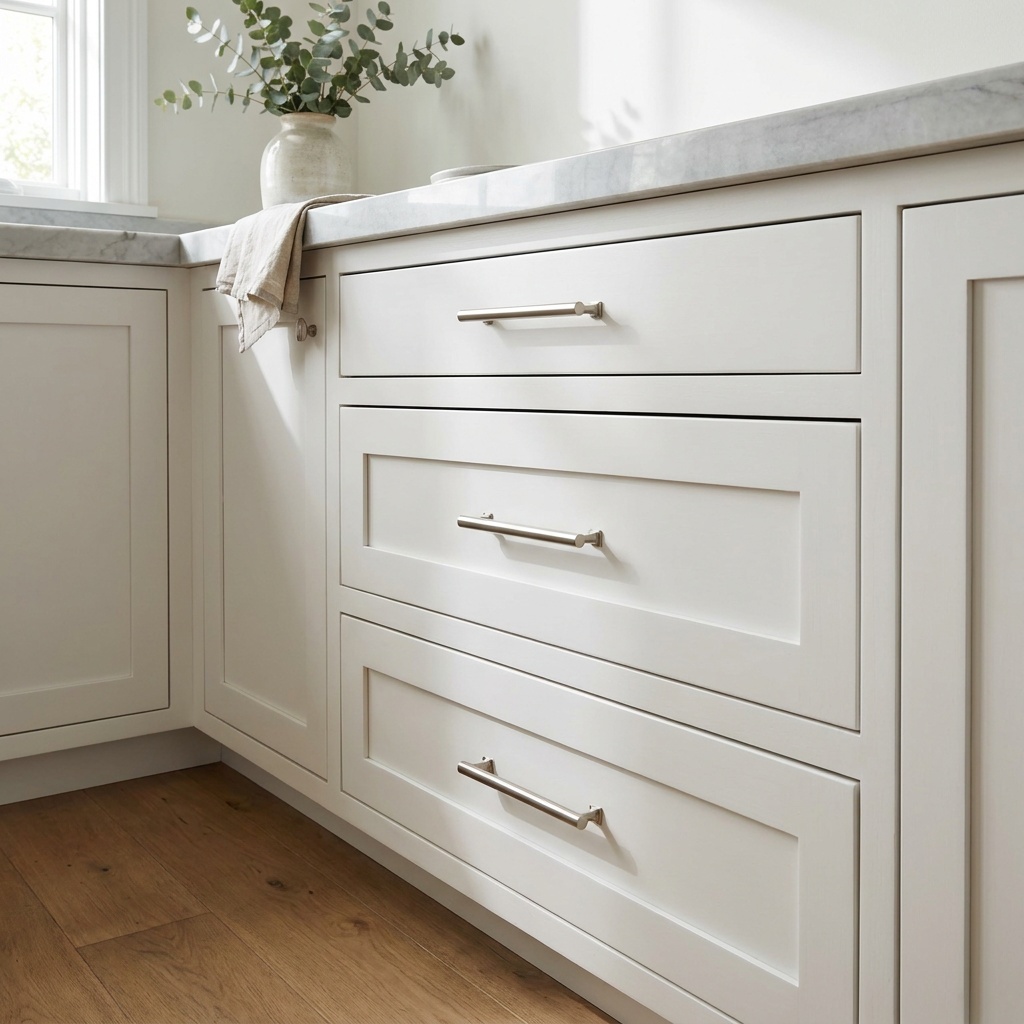
The template matters more than the tape measure
The most common installation flaw is not a wrong size but a run of pulls that wander by an eighth of an inch, which the eye catches immediately on a long wall of drawers. A drilling jig set once and used on every piece of the same type keeps them in line.
Finish, profile, and mixing metals
Hardware is a small surface doing a lot of visual work, so finish choice carries farther than its size suggests. A few patterns hold up:
- Repeat the finish at least three times. If the cabinet pulls are aged brass, let the faucet, a light fixture, or the hood strap pick it up too. A finish that appears once looks accidental.
- Mixing metals works when one leads. Two finishes in one kitchen is common, for example warm brass hardware with a stainless range. Give one finish the majority of pieces rather than splitting them evenly.
- Living finishes change over time. Unlacquered brass and some bronzes darken and develop patina where hands touch them. Expect the trash-drawer pull to age fastest.
Profile matters too: a pull that projects farther is easier to grab but more likely to catch a hip in a tight galley. Hold samples before you choose.
Bringing it together in a North Atlanta kitchen
Hardware usually gets chosen late in a remodel, yet it is the part of the kitchen your hands touch dozens of times a day. In the larger kitchens common around Milton and Johns Creek, with long islands and wide drawer banks, a two-size pull plan and a separate appliance pull for paneled refrigeration tend to keep everything consistent. In a compact kitchen, one pull size throughout often does more than chasing the one-third rule drawer by drawer.
Hardware rarely drives a remodel budget, but the cabinetry it sits on does; our kitchen remodel cost guide lays out how cabinet scope shapes the overall project.
Frequently asked questions
What size pulls should I use on kitchen drawers?
Aim for a pull whose overall length is roughly one third of the drawer front’s width. On the common 15- to 21-inch drawers that usually means 128mm (about 5 inches) center-to-center, on 12- to 15-inch drawers 96mm, and on 24- to 36-inch drawers 160mm to 224mm. Past about 30 inches, either step up to a long bar or use two matching pulls set roughly a third of the way in from each side. Always confirm the center-to-center measurement before buying, since that, not overall length, decides whether the holes line up.
Should kitchen cabinets have knobs or pulls?
The most common convention is knobs on doors and pulls on drawers, because a door swings on hinges and only needs a point to grab, while a drawer slides straight out and a pull spreads the force across the front. That said, all pulls is a cleaner, more contemporary look and is easier on hands, and all knobs suits a traditional or small kitchen. The one thing to avoid is mixing at random. Pick a rule and apply it to every door and drawer in the room.
Where do you place knobs on cabinet doors?
On a base cabinet door, the knob goes near the top corner on the side opposite the hinges, typically 2.5 to 3 inches down from the top edge and centered on the vertical frame of the door. On an upper cabinet door, mirror it to the bottom corner, the same distance up from the bottom edge. Centering on the stile, the flat frame of a Shaker door, keeps the knob off the recessed panel and makes the whole run read as aligned.
How do you place pulls on a stack of drawers?
On a shallow top drawer, center the pull both left to right and top to bottom. On the deeper drawers below, keep each pull centered left to right but set it near the top edge, often in line with the top-drawer pull’s distance from its own top, so the whole stack lines up in a row. Some designers center every pull instead; either works as long as every drawer bank in the kitchen follows the same rule.
What size appliance pull do I need for a paneled refrigerator?
Most paneled refrigerator doors take an appliance pull of 12 to 18 inches center-to-center, and many panels arrive pre-drilled to the manufacturer’s recommended spacing, so measure the panel before choosing a style. Appliance pulls are built heavier than cabinet pulls and usually mount with a set screw on the back, because a refrigerator door’s seal fights every pull. A paneled dishwasher typically uses a shorter appliance pull or a long cabinet pull matched to the drawers around it.
If you are planning new cabinetry and want help settling hardware sizes, placement, and finishes alongside the rest of the design, see what we do, then book a consultation or call 404-640-2361.