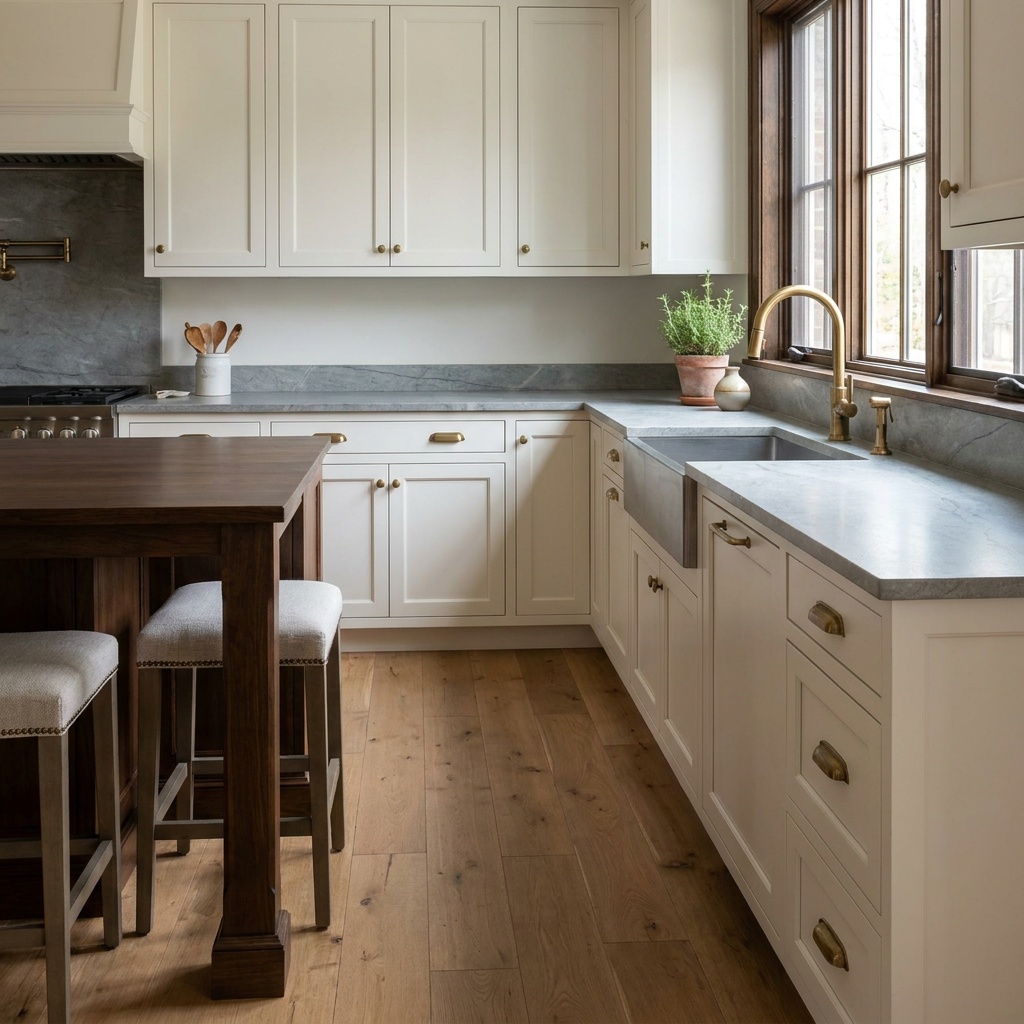
Choosing a kitchen sink comes down to four decisions, taken in this order: how it mounts, how many bowls, how deep, and what it is made of. Undermount is the default in any kitchen getting new stone counters, because it lets you sweep crumbs straight off the counter into the bowl. A single bowl 30 to 33 inches wide has become the standard request, wide enough to lay a half-sheet pan flat, and it needs a sink base cabinet roughly 3 inches wider than the sink itself. Nine to ten inches is the useful depth range; deeper reads generous and costs you back comfort and under-sink storage. On material, 16-gauge stainless is the forgiving choice, fireclay is the white apron-front look that stays white, and granite composite is the quiet matte one that hides water spots. Each fails in a different way, and that is what decides it.
Mounting: Undermount, Drop-In, or Apron Front
How the sink meets the countertop touches everything else, and it has to be settled before the fabricator templates the stone.
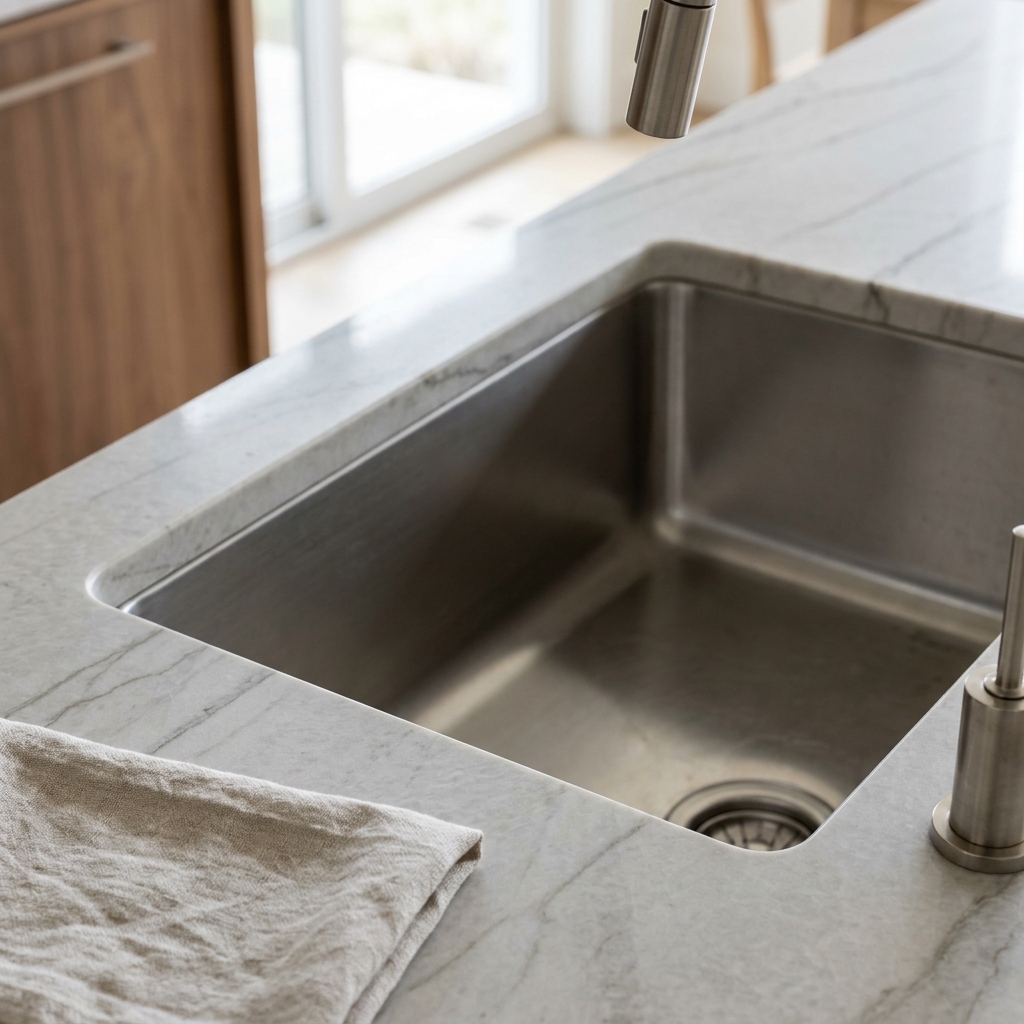
Undermount sinks hang below the counter, so the stone edge is the only thing you see. It is the standard in a remodeled kitchen with stone tops, and not only for looks: with no rim sitting proud of the surface, wiping the counter means pushing everything into the bowl in one motion. Fabricators talk about the reveal, meaning how much of the sink rim shows inside the stone opening. A positive reveal leaves a strip of rim visible, zero reveal lines the stone up flush with the inside edge, and a negative reveal lets the stone overhang the bowl. Zero and negative look cleanest, though a negative reveal traps grime under the stone lip where you cannot see it.
Drop-in sinks, sometimes called top-mount, sit in a cut opening with a rim resting on the counter. They are the practical answer on laminate or butcher block, where an undermount would expose the substrate to water. The rim collects crumbs, but a drop-in installs into almost anything and can be swapped later without touching the counter.
Apron front, or farmhouse, sinks replace the front of the cabinet with the front of the sink. This is a cabinetry decision rather than a plumbing one: the front rail comes out, the door or drawer above is cut down, and the basin sits on a supported platform rather than hanging from the counter. A 33-inch apron sink is the most common size and generally wants a 36-inch base. If your cabinets are staying and only the counters are changing, an apron sink is the one option that turns a countertop project into a cabinet project.
One Bowl or Two
Single bowls have taken over, and the reason is the dishwasher. The second bowl existed to wash in one side and rinse in the other. Once almost nothing gets hand-washed except pans and sheet trays, the divider stops earning its space and starts blocking the large items you do still wash. A 33-inch single bowl gives close to 30 inches of uninterrupted basin, which takes a half-sheet pan flat and a roasting pan without tilting.
Two bowls still make sense in specific households: two people prepping at once, a compost or scrap bowl running on one side, or a stock pot soaking for hours while you still need a working sink. When you go that way, look at a low divide, where the partition stops three or four inches below the rim. You keep two drains and the ability to fill one side, but a long pan can still lie across. A 60/40 split beats a straight 50/50 in almost every kitchen.
Depth, Gauge, and Sound
Bowl depth is where showroom logic and daily use disagree. Ten inches is the current default and works for most people. Twelve-inch bowls look impressive, but you feel them: more bending at the sink, and every inch of depth is shelf space gone from the cabinet below. If anyone in the house is on the shorter side or has a bad back, eight or nine inches is kinder.
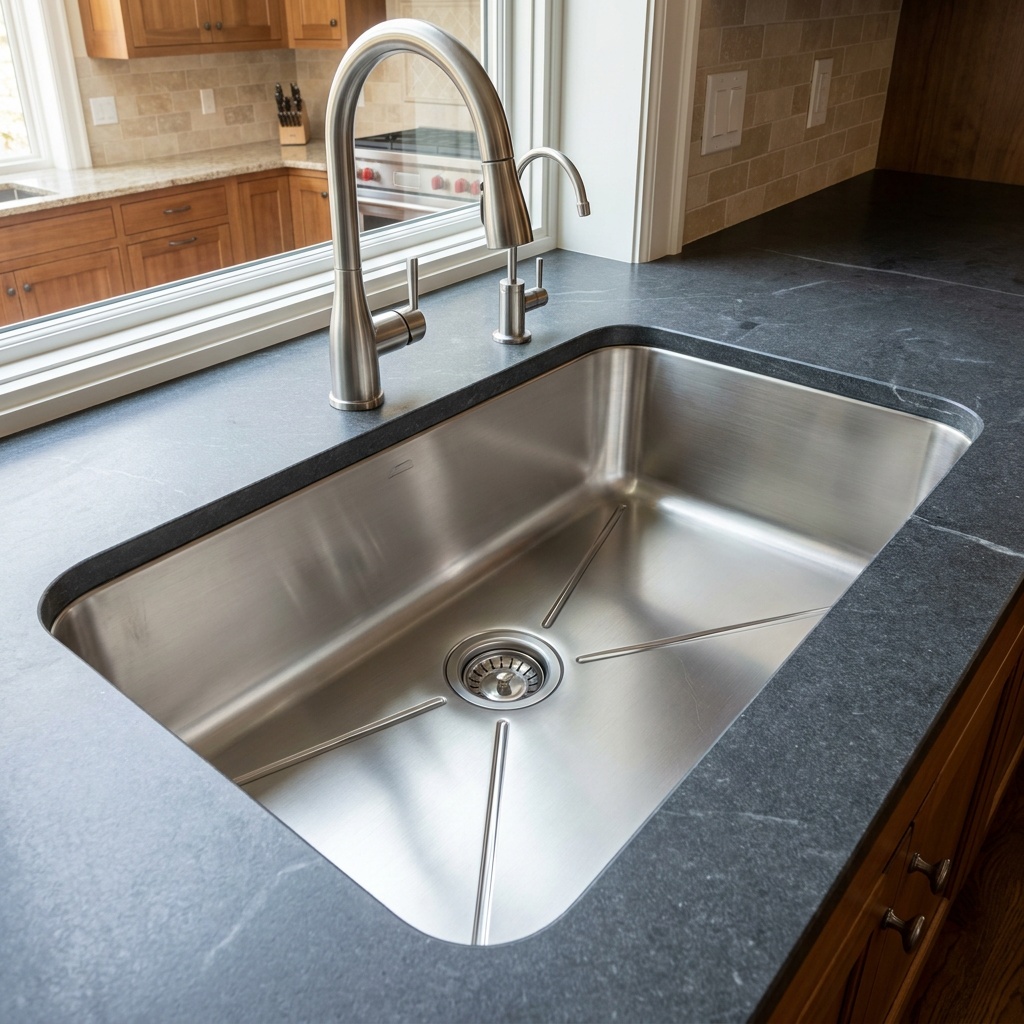
Two details inside the bowl matter more than the depth spec. A rear-set drain moves the plumbing to the back of the cabinet, freeing storage underneath and leaving a flat area at the front of the basin. Sloped channel grooves keep water running to the drain instead of pooling in a ring.
For stainless, gauge is the thickness of the steel, and lower numbers are thicker. Sixteen gauge is the one to ask for. Eighteen is acceptable when the sink is well undercoated; anything thinner dents when a cast-iron pan lands wrong and rings like a drum under running water. Sound deadening is the other half: a thick sprayed undercoating across the whole underside plus rubber pads, not two stick-on squares. Corner radius is a style call with a maintenance tail, since square zero-radius corners read modern and collect grime in the crease, while a 10 or 15 millimeter radius keeps the crisp look and lets a sponge reach in.
The Three Materials, Compared
| Stainless steel | Fireclay | Granite composite | |
|---|---|---|---|
| Look | Neutral, recedes | Glossy white, a feature | Matte, usually dark |
| Main strength | Nearly indestructible; forgiving of heat | Glazed surface stays white and does not stain | Quiet; hides water spots and light scratching |
| How it fails | Dents, scratches, shows water spots | Chips at the rim if something heavy lands | Can scorch or dull under abuse; lighter colors film |
| Dropped glassware | Often survives | Rarely survives | Sometimes survives |
| Weight | Light | Heavy; needs a built support | Moderate |
| Best for | Hard-working kitchens, any budget level | Kitchens where the sink is part of the design | Open-plan kitchens where noise carries |
Stainless Steel
Stainless is the default for good reason. It shrugs off a hot pan straight from the oven, tolerates every cleaner under the counter, cannot chip, and comes in every size and mount configuration made. It is also the only one of the three a dropped wine glass tends to survive.
What it does badly is look pristine. It scratches from day one, though those scratches blend into a uniform patina most people stop noticing within a month, and it shows water spots, which matters if the sink faces the room. Brushed satin hides more than a mirror finish. The PVD-coated finishes now widely available in gunmetal, matte black and warm brass let the sink echo the hardware and hood rather than fight them, the same coordination question behind choosing a range hood.
Fireclay
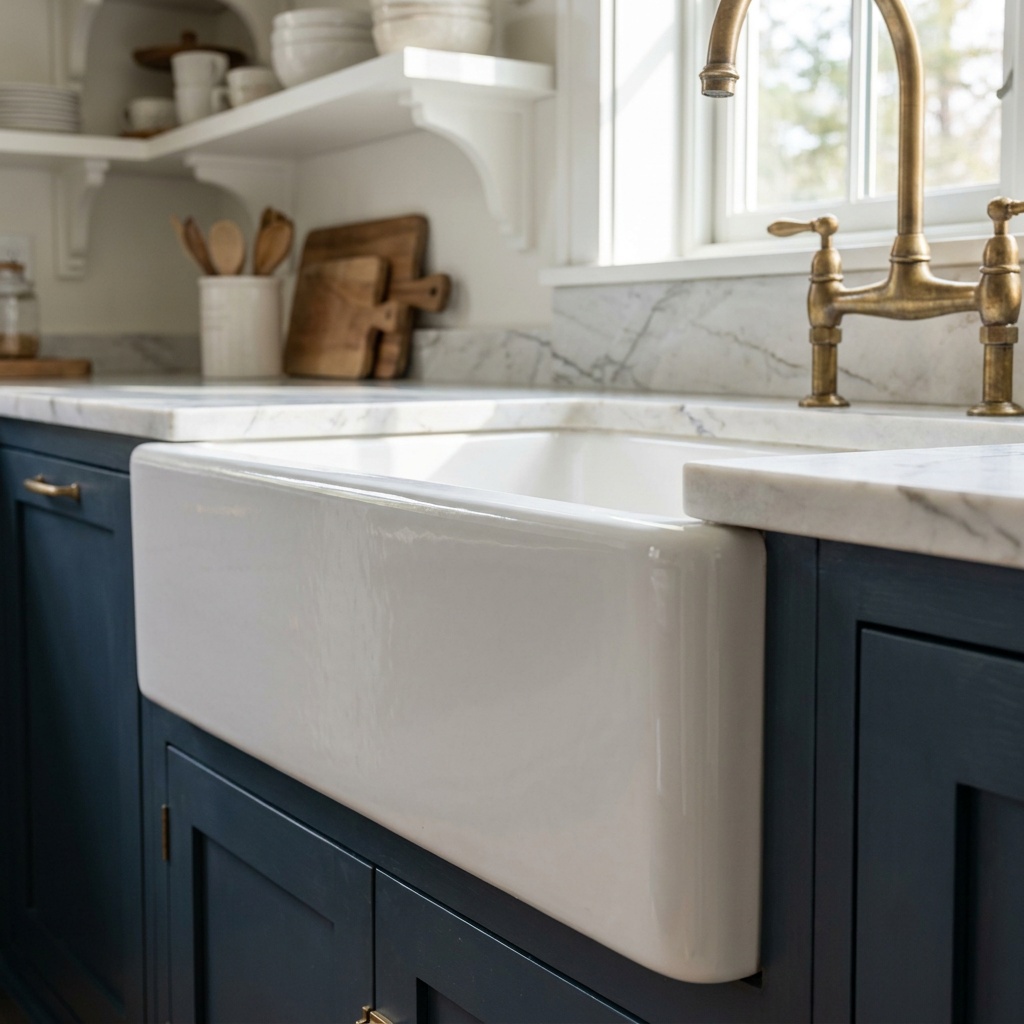
Fireclay is clay shaped, glazed and fired at very high temperature so the glaze fuses into the body rather than sitting on top of it. The result is a hard, non-porous white surface that does not absorb stains from coffee, wine or turmeric, and does not yellow with age. In a kitchen where the sink is meant to be seen, particularly the traditional and English-leaning kitchens common in Milton, nothing else does that job.
The trade-offs are physical. It is heavy, often over a hundred pounds empty, so the cabinet needs a built platform underneath rather than clips. It is unforgiving of impact: the rim can chip if a cast-iron skillet catches it, and glassware dropped into the bowl breaks. Fine crazing lines can appear in the glaze over years, which some owners read as character. And because each sink shrinks slightly in the kiln, dimensions vary from the spec sheet by a fraction of an inch, which is why the fabricator needs the physical sink on site before templating.
Granite Composite
Granite composite is roughly 80 percent crushed granite or quartz mineral bound in acrylic resin, molded into a single piece. It is the quietest of the three by a wide margin, which matters more than people expect in an open kitchen where the sink is fifteen feet from a sofa. The matte surface hides water spots and light scuffing better than anything else here, and it takes hot pans without flinching.
Its weaknesses are narrow but real. Sustained heat, a pan left sitting on the surface rather than set down, can dull the finish, and dark colors are more forgiving than light ones. In hard-water regions light composite sinks develop a chalky mineral film, though metro Atlanta’s surface water runs relatively soft, so that is less of a running battle here. Composites also come in a fixed palette, and a graphite bowl against a pale countertop is a deliberate contrast rather than a neutral choice. Read it alongside the counter you have chosen, whether that is quartz, quartzite or granite.
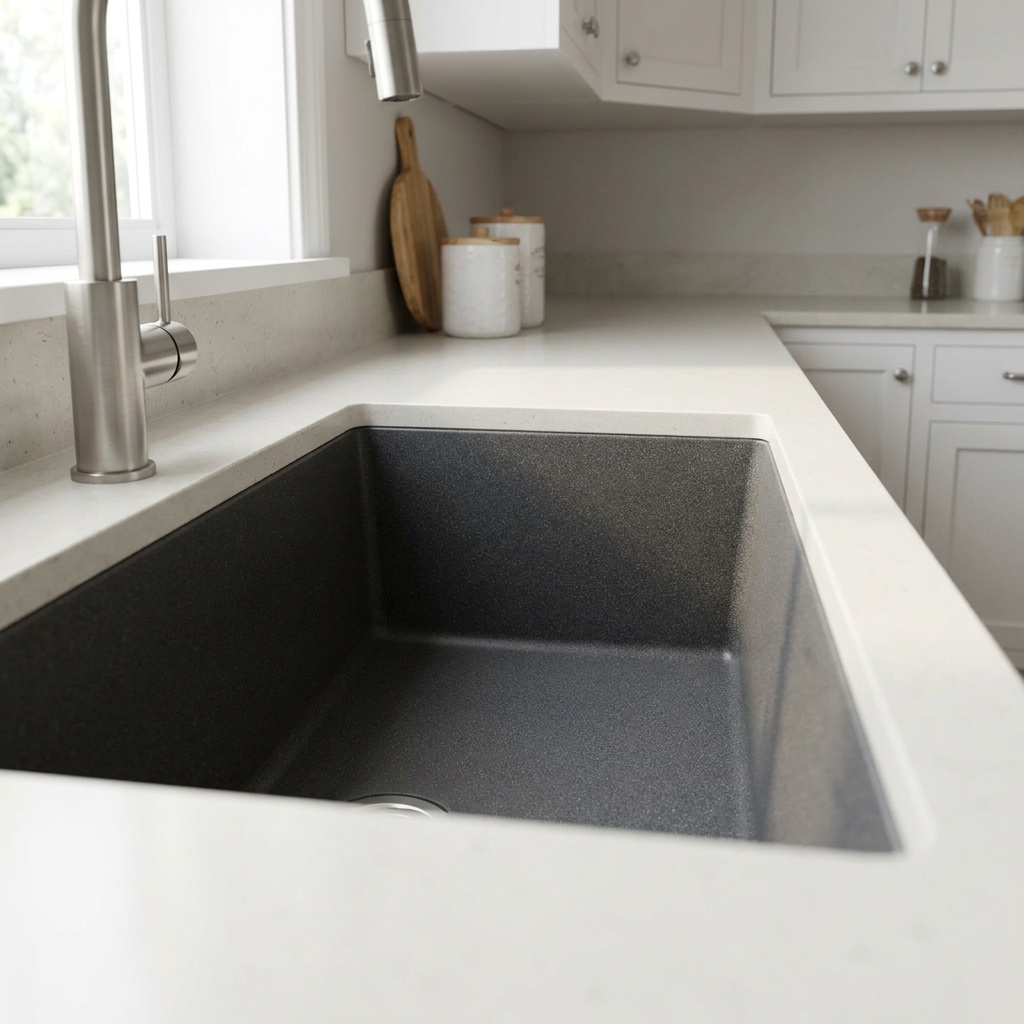
Decide the Sink Before the Countertop
The sequencing catches people out. An undermount sink attaches to the underside of the stone, and every hole for the faucet, sprayer, soap dispenser or disposal air switch is drilled into that stone, not into the sink. All of it is fixed the moment the fabricator templates, so the sink has to be on site and the faucet and accessories chosen before templating day, or you are drilling a finished countertop after the fact.
Confirm at the same time that the sink base is wide enough, with about three inches of interior clearance beyond the sink’s outside width, and that the disposal flange matches the drain opening, which fireclay in particular sizes generously. Those decisions, along with cabinet and counter selections, are what move the number on a kitchen project up or down, which we break down on the kitchen remodel cost page.
Common Questions
What size sink fits a 36-inch base cabinet?
A 33-inch sink is the usual answer, and it is the most common apron-front size for that reason. The rule that prevents fit problems is to allow about three inches more interior cabinet width than the sink’s outside width, because a 36-inch base measures 36 inches outside and less inside once side panels and face frame are counted. A 30-inch base generally takes a 27 or 28-inch sink. Measure the actual opening, not the nominal size.
Is a single bowl or a double bowl better?
For most households with a dishwasher, a single bowl is more useful, because the divider blocks exactly the large pans and sheet trays you still wash by hand. A double bowl earns its place when two people prep at once, when a scrap bowl runs on one side, or when something soaks for hours and you still need a working sink. If you want two, choose a 60/40 split with a low divide rather than an even 50/50.
Do fireclay sinks chip easily?
Fireclay does not stain and does not scratch in normal use, but it is brittle at the rim. A heavy cast-iron pan swung into the edge can take a chip, and glassware dropped into the bowl usually breaks rather than bouncing. Fine crazing lines in the glaze can appear over the years. If your kitchen is hard on equipment, stainless or composite is the calmer choice.
How deep should a kitchen sink be?
Nine to ten inches suits most people and most kitchens. Ten inches handles a stock pot and a full roasting pan comfortably. Twelve-inch bowls look generous in a showroom but add bending at the sink every day and take real storage out of the cabinet below, where the trap and disposal already compete for room. If anyone using the kitchen is shorter or has back trouble, eight or nine inches is easier to live with.
Can I add a farmhouse sink to my existing cabinets?
Sometimes, but it is cabinet work rather than plumbing work. The sink base has to give up its front rail, the door or drawer above has to be cut down or removed, and a supported platform has to be built inside to carry the weight, which for fireclay can exceed a hundred pounds empty. Retrofit apron sinks made to drop into a standard base reduce the surgery involved.
Talk It Through Before You Order
A sink is a five-minute decision you live with every day for fifteen years, and its cabinet and countertop implications are far easier to sort out before anything is ordered. If you are planning a kitchen in Alpharetta or anywhere in North Fulton and Forsyth, book a consultation or call 404-640-2361, and we will get the sink, cabinet and countertop sequence right the first time.