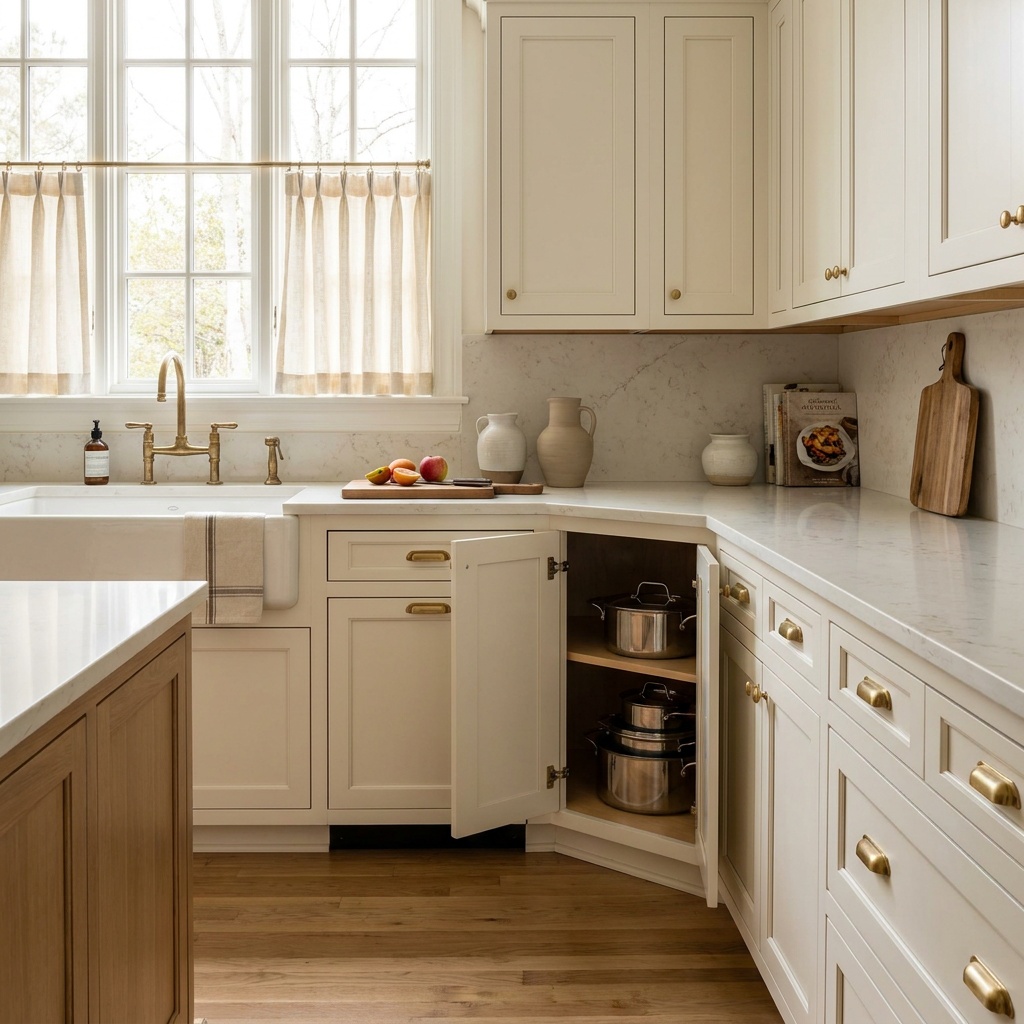
A standard kitchen corner eats about 36 inches of cabinet run along each wall, and how much of that you get back depends entirely on what you put inside it. A full-round lazy Susan spins 26- to 32-inch shelves inside a square box, so roughly a quarter of the volume sits unreachable in the four gaps around the circle. A Super Susan deletes the center pole and sets the shelves on a bottom bearing, which hands that volume back and lets you lift a stockpot straight out. A magic corner swings two tiered trays completely clear of the opening and carries around 55 pounds per tray on soft-close travel. A blind corner pull-out slides two kidney-shaped shelves out and swivels the rear one forward. Corner drawers skip the mechanism entirely, pulling two or three deep angled boxes toward you. And in a handful of layouts the best move is to give the corner to a sink, an appliance nook, or nothing at all.
Why the corner is the hardest 36 inches in a kitchen
Two runs of 24-inch-deep base cabinets meeting at 90 degrees create a box about three feet square with one opening. Everything in the back half sits more than two feet past the door, below counter height, in the dark. The space exists; your arm and your eyes do not reach it.
Three details decide which solution will work in your kitchen, and all three get measured before anything is ordered:
- How the corner is framed. An angled (diagonal) corner cabinet gives up 36 inches on each wall behind a flat 17- to 24-inch door. A blind corner base hides one run behind the other, usually occupying 40 to 45 inches of wall behind a door of 15 to 24 inches. Carousels suit the first, pull-outs the second.
- Door and pull collisions. Where two base runs meet, a door on each side can swing into the adjacent pull or a drawer front on the perpendicular run. A 3-inch filler at the corner is cheap insurance; finding the problem at install is not.
- Who opens it daily. A carousel rewards a quick one-handed spin. A pull-out wants a firm straight tug and room to stand back. That shapes daily life more than any spec sheet.
Older North Atlanta kitchens raise the question twice: L- and U-shaped plans from the 1990s and 2000s often have two inside corners in one room, and the two rarely want the same answer.
The five corner solutions, side by side
| Solution | Fits | How you reach things | Strongest at | Trade-off |
|---|---|---|---|---|
| Lazy Susan (round, center pole) | Angled corner base | Spin the shelf to you | Many small items, fast | Loses the corner gaps; pole blocks tall items |
| Super Susan (bearing, no pole) | Angled corner base | Spin, then lift out | Pots, bowls, appliances | Fewer shelves; heavy when loaded |
| Magic corner / swing-out | Blind corner base | Pull, the back tray follows | The hidden half | Most mechanism; precise install |
| Blind corner pull-out | Blind corner base | Slide out, swivel the rear shelf | Retrofits | Lower weight limit; clearance critical |
| Corner drawers | Purpose-built angled corner | Pull straight toward you | Deep storage | Custom build; no retrofit |
The lazy Susan, and why it still earns its place
A classic lazy Susan is two or three round shelves on a center pole inside an angled corner cabinet. Shelves run from 18 to 40 inches across, with 26 to 32 inches covering most 33- and 36-inch corner bases. The pie-cut version for a blind corner uses half-moon shelves of 24, 28 or 31 inches mounted to the door.
The criticism is geometric, not a matter of quality: a circle inside a square leaves four gaps the shelf never reaches, so about a quarter of the volume falls outside it. Those gaps collect whatever slides off the back — the avalanche-on-every-spin complaint. Lipped or dished shelves fix most of it.
Where it is the right call: a corner holding many small, light, frequently grabbed things — oils, vinegars, canned goods, baking supplies. Spin, grab, go. Nothing else is faster, which is why it has outlasted every prediction of its death. If that corner sits beside the range, see our notes on spice storage that actually works.
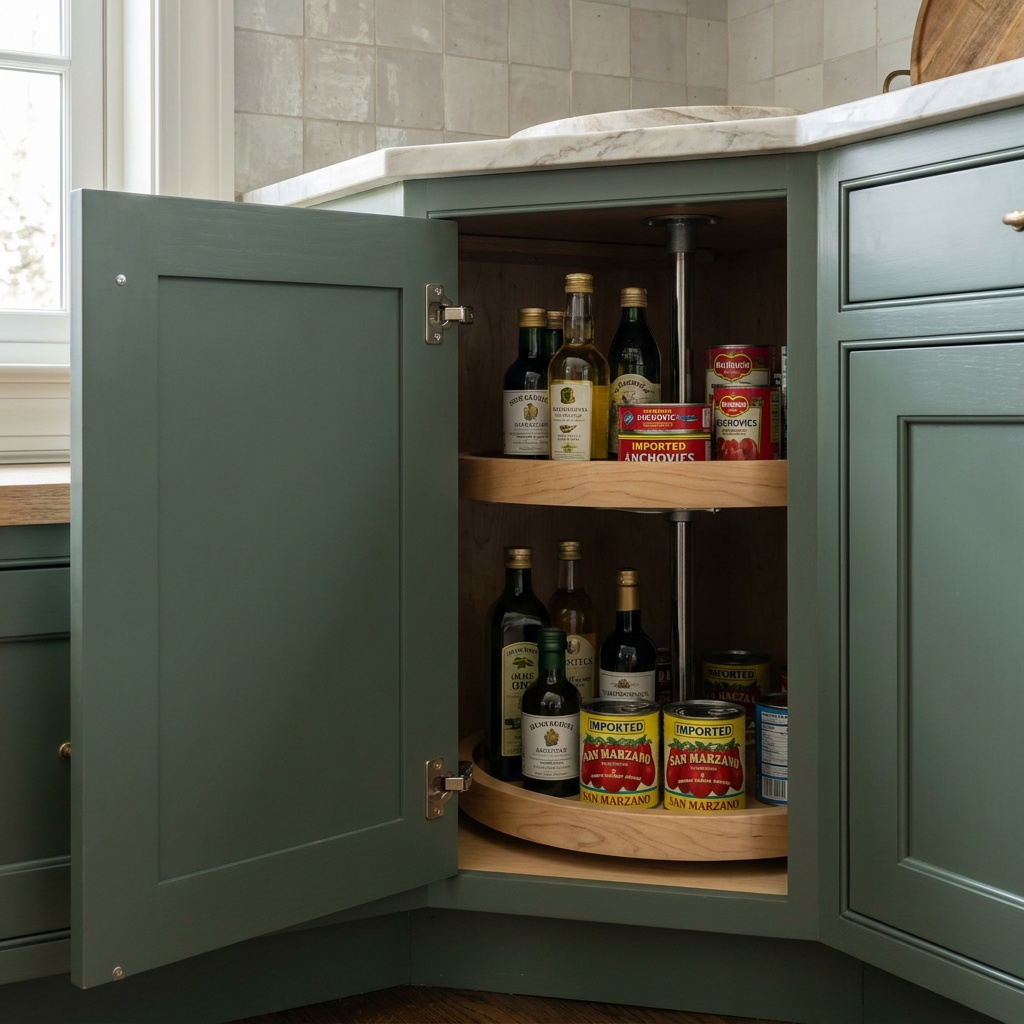
Its limits are weight and height. The rotating hardware caps the load, so a cast-iron Dutch oven is poor use of a spinning shelf, and the pole blocks anything tall through the middle. The Super Susan solves both: each shelf sits on its own bottom bearing with no pole, so you get the full diameter, you can stand a food processor anywhere on it, and you can lift a loaded pot straight up and out.
The magic corner: the hidden half, delivered
A magic corner — also sold as a swing-out, best known in the German LeMans-style systems — holds two sets of tiered trays. The front set rides out with the door; the rear set, buried in the dead corner, then swings forward into the opening. Nothing stays behind. Good systems run soft-close, carry roughly 55 pounds per tray on trays around 15 inches, and adjust in about 2-inch steps.
This is the most storage you can genuinely use out of a blind corner: the contents come to you, standing up, in daylight. It is also the most mechanism: hinges, arms and rails work in sequence, so the box has to be square, the floor level and the door hung precisely.
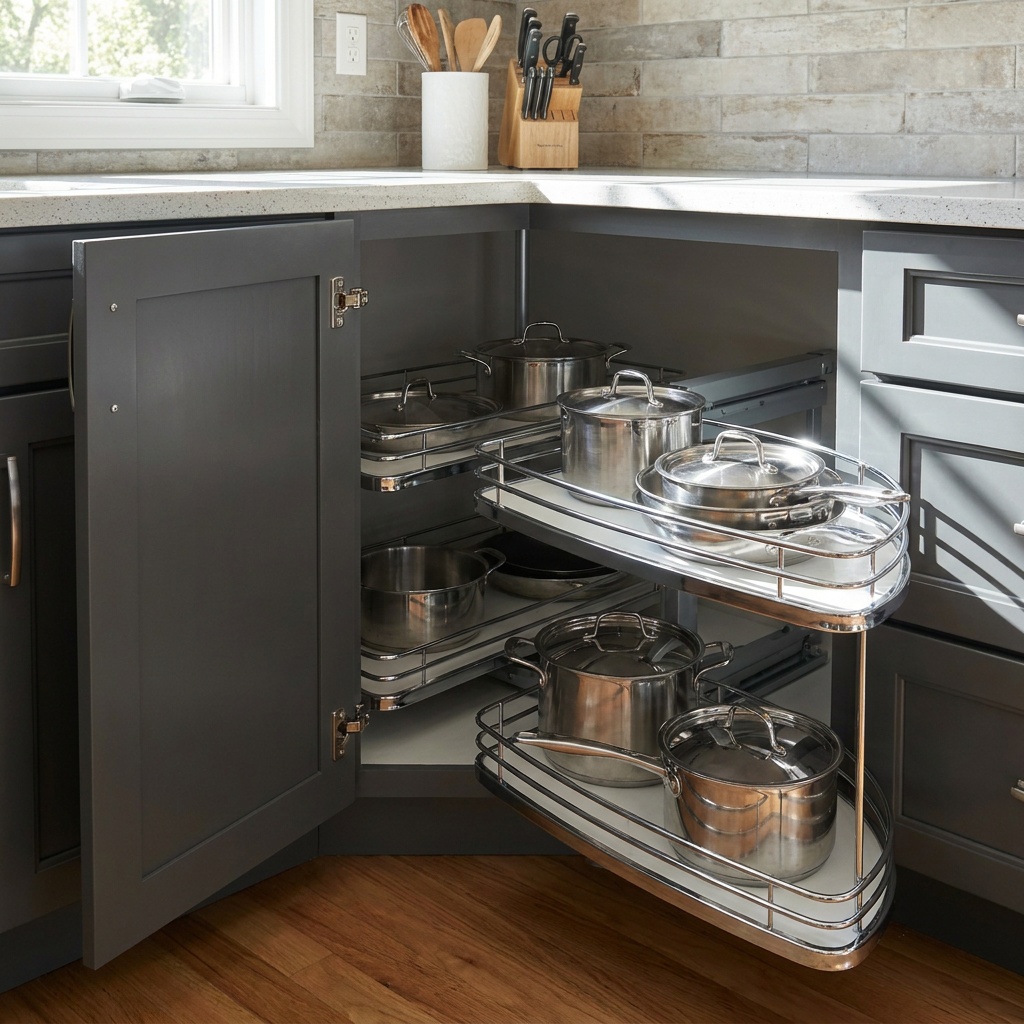
Give it the corner you open ten times a day — pans by the range, plates by the dishwasher — not the one holding the slow cooker. It sits at the pricier end of corner hardware.
The blind corner pull-out: the retrofit workhorse
A blind corner pull-out carries two kidney- or half-moon-shaped shelves on a slide. The assembly comes out, then the rear shelf swivels toward you. It does less than a magic corner, but it does one thing nothing else here does: it drops into a blind corner you already own, with the door you already have.
That makes it the honest answer when the cabinets are sound and the layout is staying put. Three measurements decide whether it fits — the door opening width, the depth from face to back wall, and the clearance for the door and pull to swing out of the path.
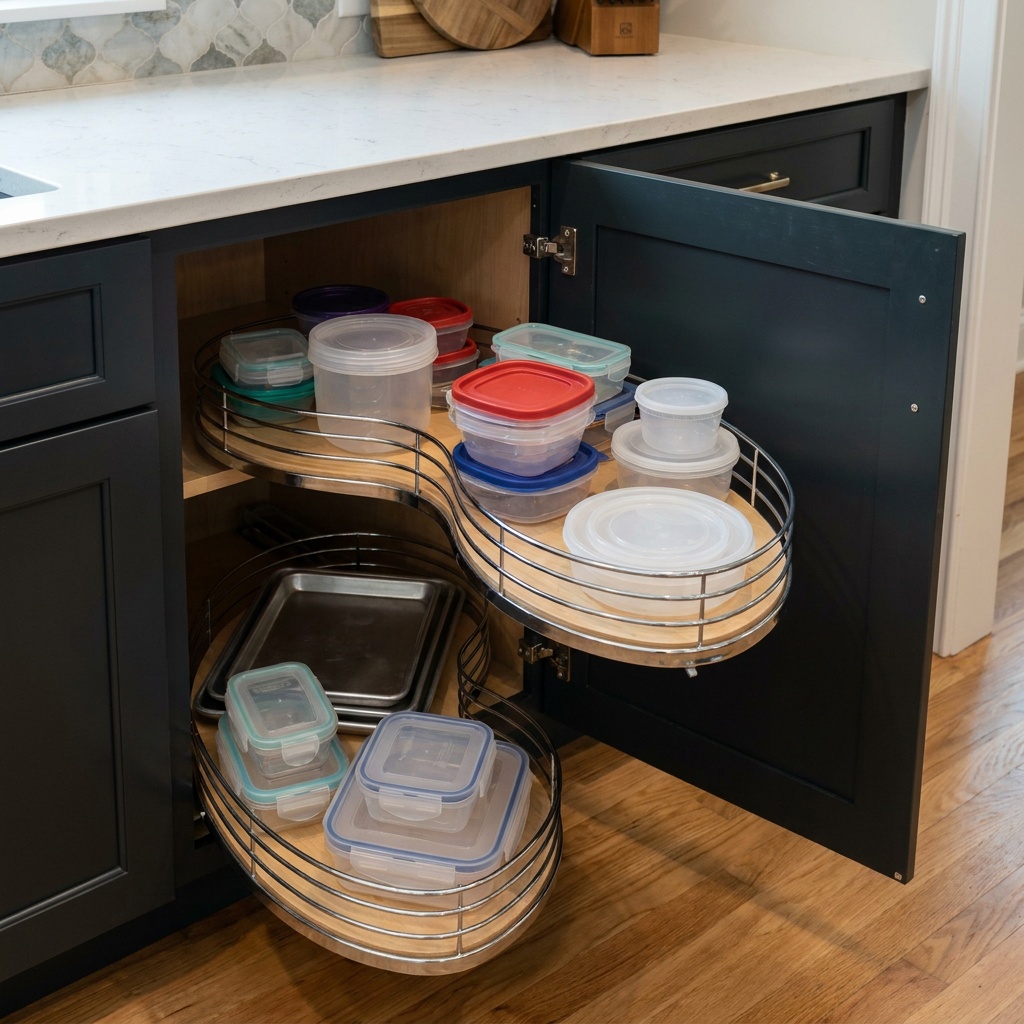
Take the weight rating seriously. These shelves are supported at one point and cantilever outward, so cast iron makes them sag and wears the glide. Containers, sheet pans and dry goods fit better.
Corner drawers: no carousel, no swivel, no surprises
Corner drawers replace the concept. Two or three deep drawers with angled fronts meet at the corner and pull straight toward you on full-extension slides. No spinning, no sequencing, no hidden half — you look down and see everything, the same reason drawers beat doors elsewhere, covered in drawers or doors for base cabinets.
The catch is that this is cabinetry, not an accessory: the corner has to be built for it and both runs planned around the angled fronts, so it cannot be added later.
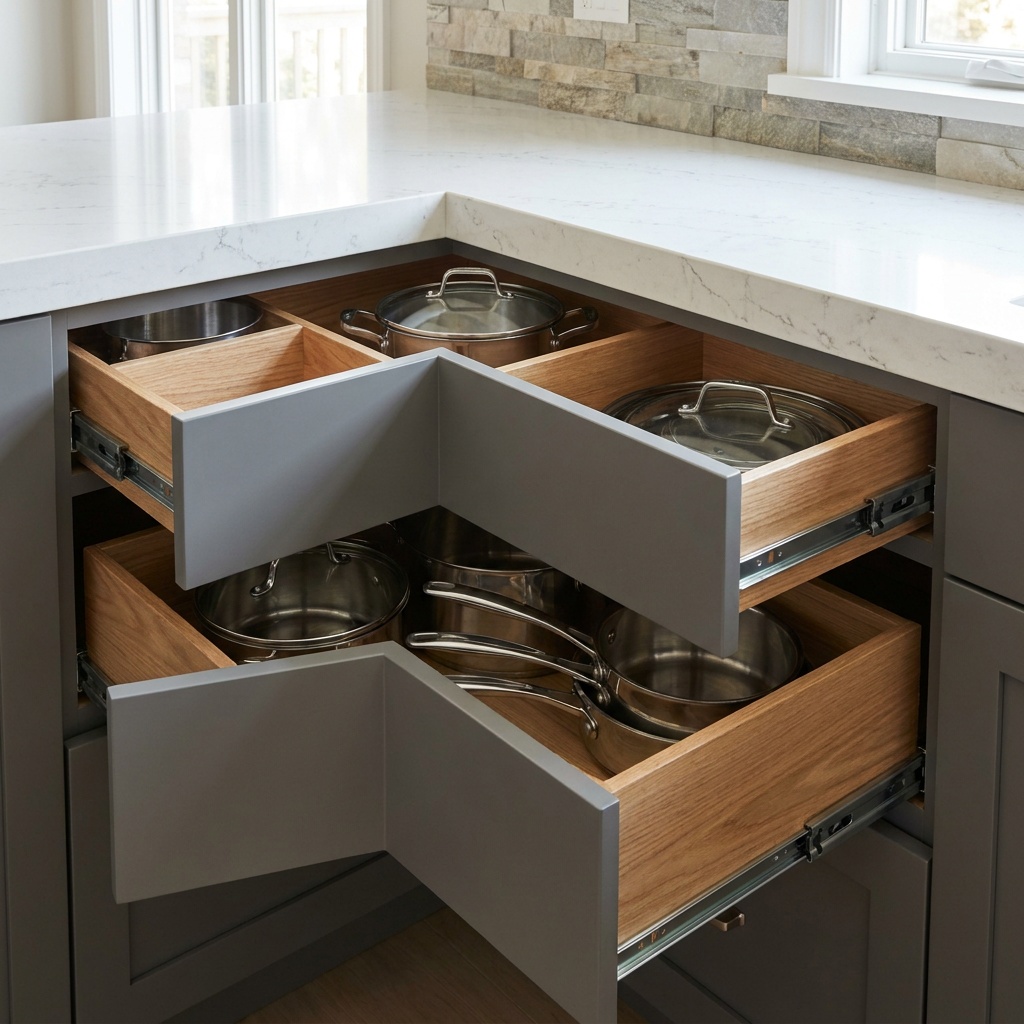
Where it shines: pans and lids beside the range, or mixing bowls in the prep zone. Add dividers and it stops being a pile. With no mechanism beyond the slides, nothing in it can fail.
Skipping the corner, on purpose
Sometimes the right corner solution is not a corner cabinet:
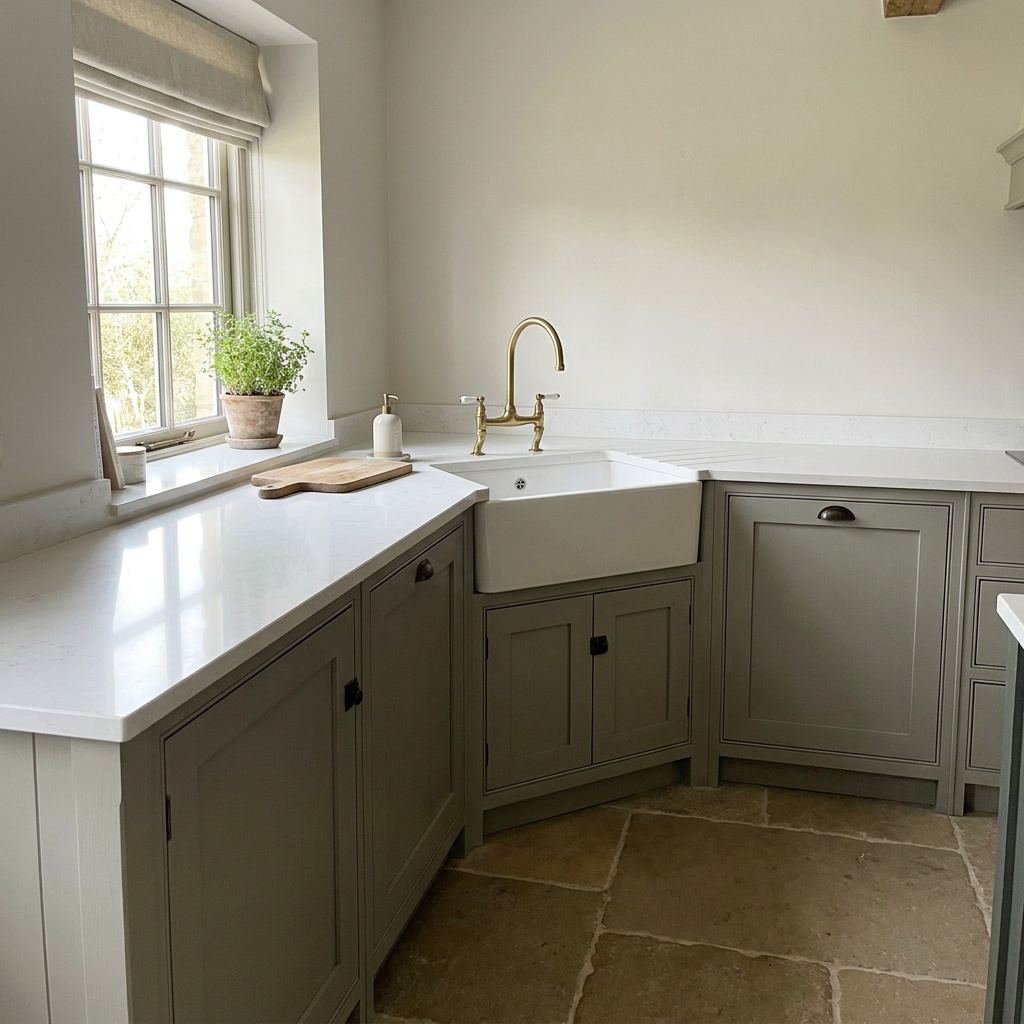
- A corner sink. Puts the hardest-to-reach cubic feet under a basin where nobody expected storage, and opens two clear counter runs — our rundown of sink shapes and bowl configurations is worth reading first.
- An appliance nook. Give the corner to the coffee setup or the toaster and mixer, with power inside, and the rest of the counter stays clear.
- A cooking alcove. A shallow recess for the range and hood turns awkward geometry into architecture.
- Ending the run. In a kitchen that gained an island, a corner can stop with a finished panel, moving that storage somewhere you reach from both sides — see island size, seating and clearance.
Upper corners are a separate decision
Wall corners change the math, because weight and sight lines matter more than cubic feet. A 24-by-24-inch diagonal wall cabinet with fixed shelves is the standard answer and handles glassware well, with a glass door turning it into display rather than a hole. The alternative is to stop the uppers short and leave the corner open — one bracketed shelf, or open shelving carried around the turn. It gives back the visual width an upper corner cabinet takes away.
How to pick yours in ten minutes
Stand at the corner and work through these:
- Angled or blind? Angled points to carousels or corner drawers. Blind points to a magic corner or a pull-out.
- Are the cabinets staying? If yes, a pull-out is usually the only fit.
- What goes in it? Light items grabbed often suit a carousel. Heavy pots and daily dishes suit a magic corner or corner drawers. Bulk stock suits a pull-out.
- What is it next to? Pans by the range, dishes by the dishwasher, dry goods by the prep counter.
- Who uses it? Reaching, kneeling and pulling are not equal for everyone.
Corner hardware is a small line next to cabinets and counters, but it is the part you touch every day. Our kitchen remodel cost guide for Alpharetta covers what moves the overall number.
Frequently asked questions
Is a lazy Susan outdated?
No, it is just narrower in use than it once was. A lazy Susan still gives the fastest access of any corner solution for small, light, frequently used items, and nothing matches a one-handed spin. What changed is that there are better answers for heavy storage: a Super Susan for pots, a magic corner for everyday dishes, corner drawers for pans. Specify a lazy Susan for the corner holding oils, cans and baking supplies, and something else for the corner holding cast iron.
How much storage does a lazy Susan actually waste?
Roughly a quarter of the cabinet’s interior volume. A round shelf inside a square box leaves four gaps at the corners the shelf never passes through, and they sit too far back to reach by hand. A Super Susan recovers some of it by dropping the center pole, which frees the full shelf diameter and lets you lift items straight out. A magic corner or corner drawers recover the most, because both are shaped to the box instead of spinning inside it.
Can I add a blind corner pull-out to my existing cabinets?
Usually yes, and that is the main reason to choose one. It needs a blind corner cabinet, a door opening wide enough for the shelves to pass through, and clearance for the door and pull to swing clear of the adjacent run. Measure the opening width, the depth to the back wall and the swing path before ordering. Weight is the other limit: these shelves cantilever off one slide, so load containers, sheet pans and dry goods rather than cast iron.
What is the difference between a magic corner and a blind corner pull-out?
A blind corner pull-out slides two shelves out and swivels the rear one toward you, and it retrofits into a cabinet you already have. A magic corner is a two-part system: the front trays ride out with the door, then the rear trays swing forward out of the dead corner, so nothing stays behind. It delivers more of the corner, holds roughly 55 pounds per tray, and runs soft-close. It also asks for a square cabinet, a level floor and a precisely hung door.
Planning a corner that works
Corners get decided on paper, weeks before demo, while the cabinet order can still change. Bring us measurements and a list of what you want within a step of the range and dishwasher, and we will lay out which corner gets which solution. We design and build kitchens across Alpharetta and into Milton and Johns Creek; see how we work on our kitchen and bath remodeling home page.
Book a consultation or call 404-640-2361, and bring photos of your corner. It is usually the first thing we open.