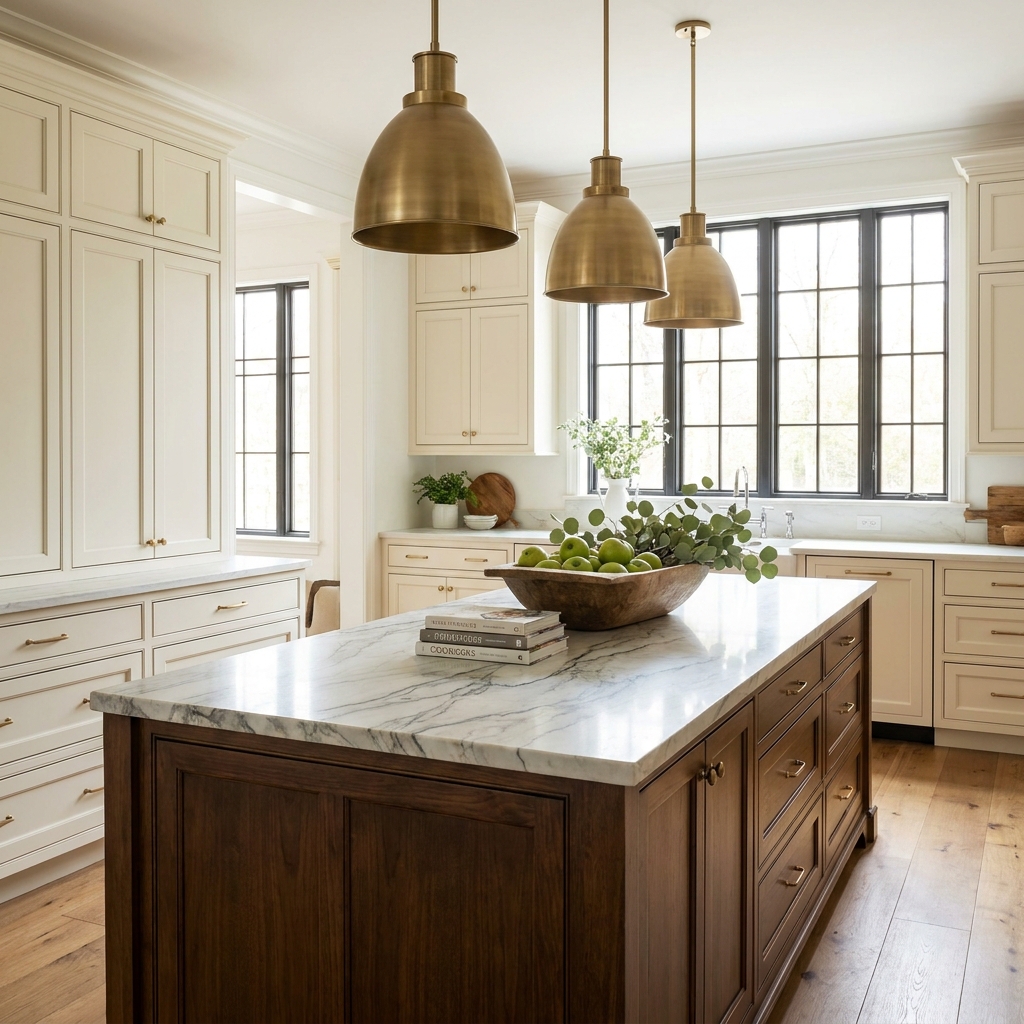
Quartz vs. Quartzite vs. Granite: The Short Answer
Quartz is engineered stone — roughly 90 to 95 percent ground natural quartz bound with resin and pigment. It is non-porous, never needs sealing, and runs about $70 to $150 per square foot installed in metro Atlanta, though your exact price depends on the slab you select, your edge profile, and how much fabrication your layout requires. Quartzite is a natural metamorphic stone, the hardest of the three at Mohs 7 to 8, UV-stable, and the most heat tolerant; budget roughly $70 to $200 per square foot installed, generally $20 to $30 per square foot above a comparable granite, with final pricing set by your kitchen’s size, layout, and the specific slab. Granite is natural igneous stone, commonly $55 to $140 per square foot installed for the grades most North Atlanta kitchens use, with exotic slabs above that range and your figure depending on stone and scope. In one line: quartz wins on maintenance, quartzite on hardness and sun tolerance, granite on durability per dollar.
What Each Material Actually Is
Quartz is manufactured. Crushed quartz is mixed with polymer resin and color, then pressed and cured into slabs. Because the recipe is controlled, the slab you approve in a showroom is very close to the slab that lands on your cabinets — the veining repeats predictably and there is no surprise pit or fissure. That consistency is the entire selling point, and it is also why some homeowners find quartz reads as slightly too uniform next to a dramatic natural stone.
Quartzite starts as sandstone. Heat and pressure fuse the sand grains into an interlocking quartz matrix, which is what makes it so hard. Every slab is unique, veining runs through the full thickness, and no two bundles from the same quarry block look identical. It is also the most demanding of the three to cut and polish, and that fabrication difficulty is baked into what you pay.
Granite is cooled magma — feldspar, mica, and quartz crystals locked together. It has been the default upgrade countertop in Georgia for three decades, so the local supply chain is deep: more metro slab yards carry granite in volume than carry premium quartzite, and that availability keeps mid-grade granite the value play in this market.
The Naming Problem: Quartz and Quartzite Are Not the Same Stone
These two materials share four letters and almost nothing else. Quartz is made in a plant. Quartzite is pulled from a quarry. One is non-porous and needs no sealer; the other is porous and does. Homeowners regularly walk into a design meeting having researched one and priced the other.
There is a second, more expensive version of this confusion. A meaningful share of slabs sold in stone yards nationwide as “quartzite” are actually dolomitic marble. The phrase “soft quartzite” gets used to explain why a slab labeled quartzite scratches or etches — but geologically that term describes nothing. Real quartzite is hard by definition. A slab that etches when a lemon touches it is marble or dolomite that has been labeled optimistically, and it will behave like marble in your kitchen: beautiful, but etching around the sink and the coffee station within the first year.
This matters most for the pale, gray-veined slabs that dominate current design boards, because that is exactly the look both stones share. Two quick checks on an offcut settle it before anything is cut: quartzite will not be scratched by a glass shard or a steel knife blade, and it will not etch from a drop of acidic cleaner or lemon juice. Marble fails both. Asking for those tests on the actual bundle you are buying is a normal request.
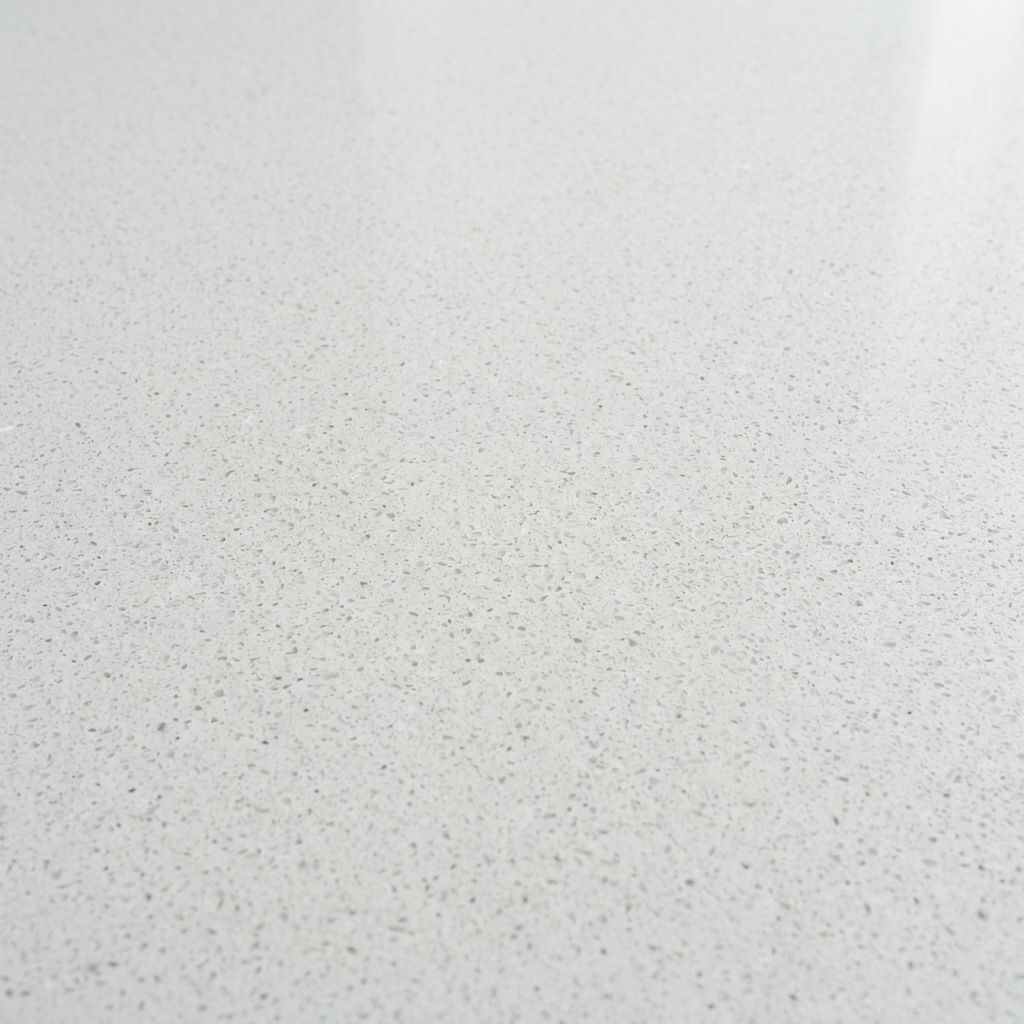
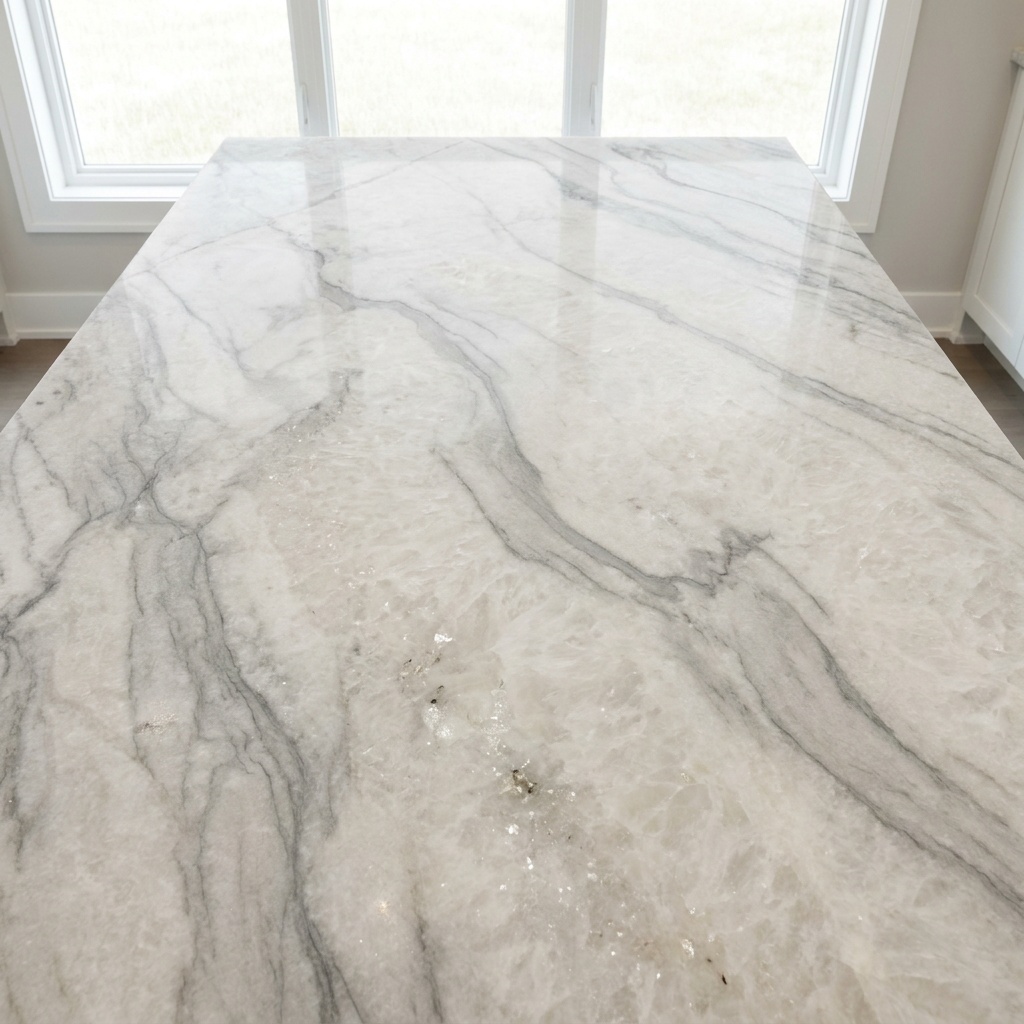
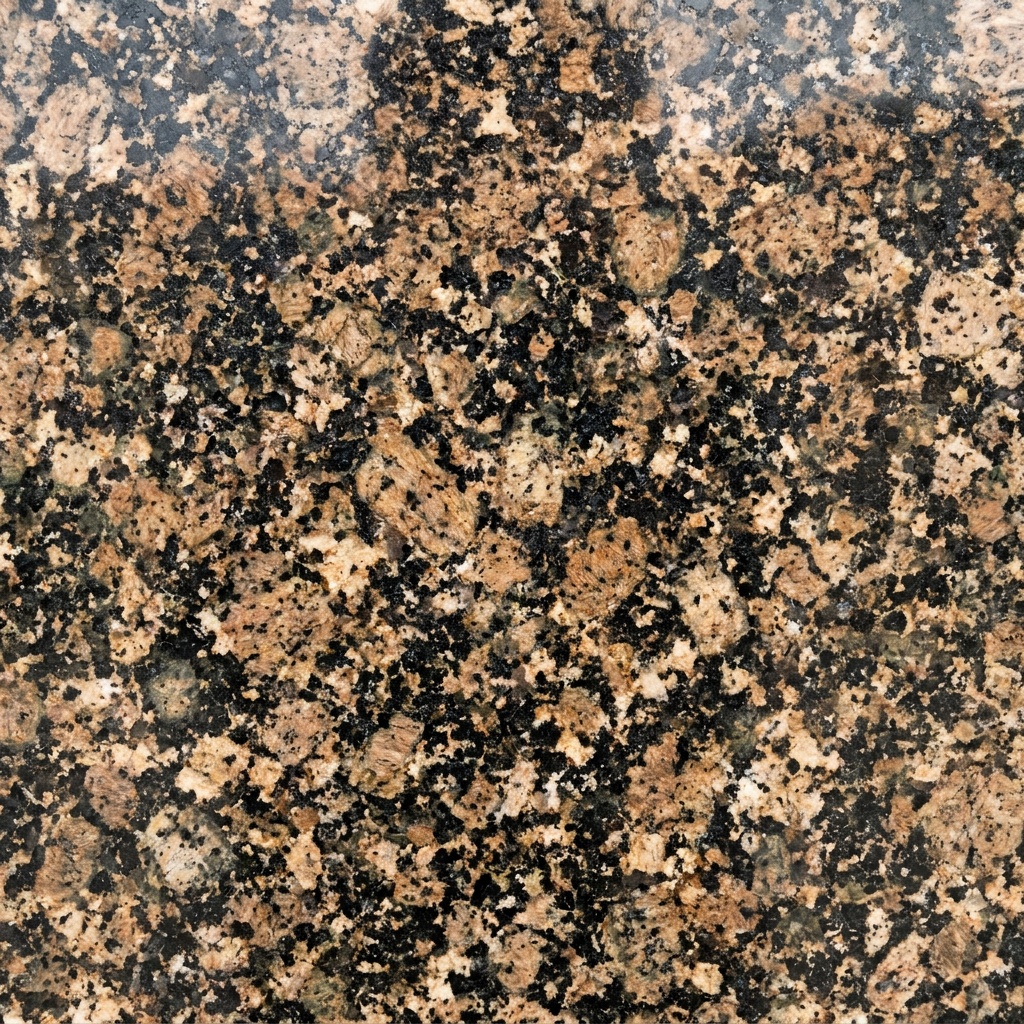
Side-by-Side Comparison
| Factor | Quartz (engineered) | Quartzite (natural) | Granite (natural) |
|---|---|---|---|
| Installed cost, metro Atlanta | ~$70–$150/sq ft | ~$70–$200/sq ft | ~$55–$140/sq ft |
| Hardness (Mohs) | ~7 (resin-bound) | 7–8 | 6–7 |
| Porosity / sealing | Non-porous, no sealing | Porous, seal about annually | Porous, seal every 1–3 years |
| Heat tolerance | Lowest — resin can scorch or discolor under a hot pan | Highest of the three | High |
| Direct sunlight | Can yellow or fade over years unless outdoor-rated | UV-stable, will not fade | UV-stable, will not fade |
| Pattern consistency | Highly predictable | Unique per slab | Unique per slab |
| Acid and etching | Resistant | Resistant when it is true quartzite | Resistant |
| Outdoor kitchens | Only outdoor-rated lines | Yes | Yes |
Every figure above is a range for planning, not a bid. Final pricing depends on your project — square footage, layout, cutouts, edge detail, backsplash height, and the particular slab you fall for in the yard.
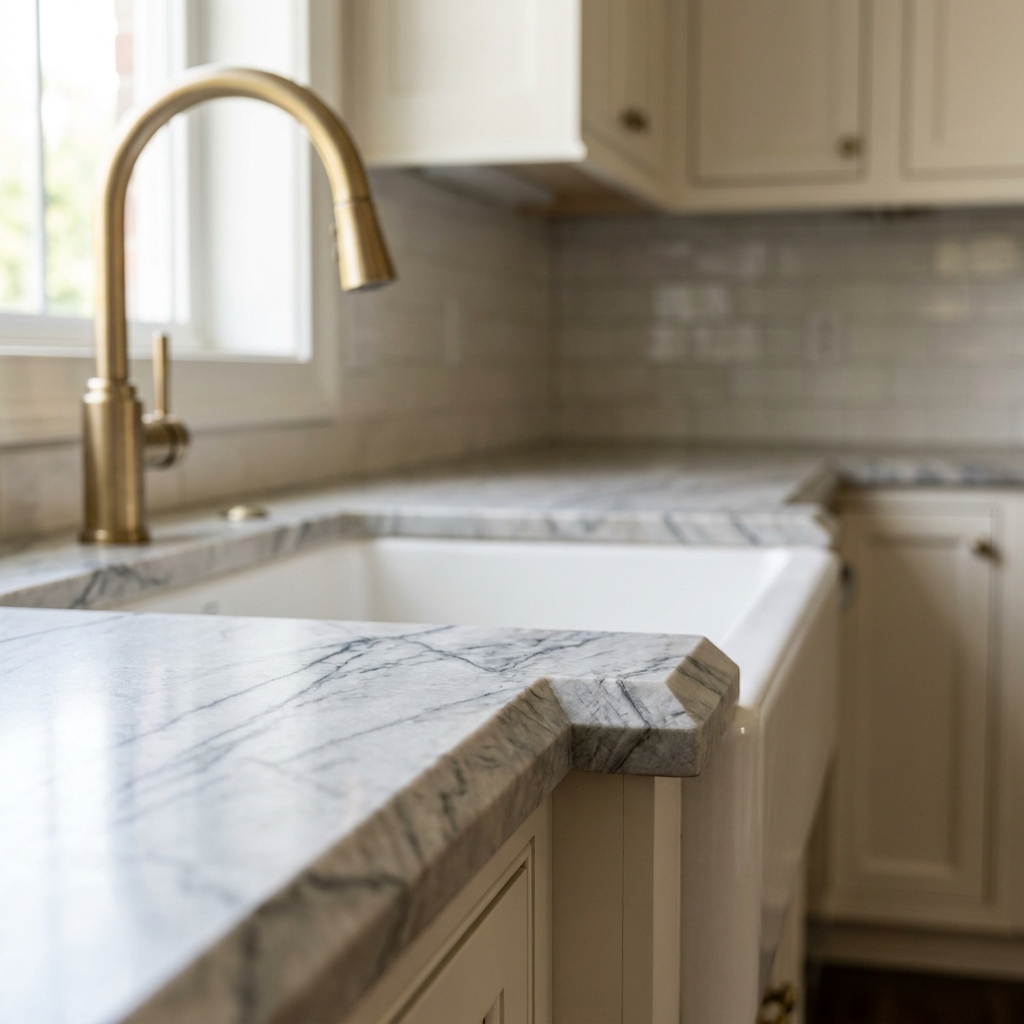
How Each One Behaves in a Georgia Kitchen
The performance differences look academic on paper and very practical in a real house.
Heat
The resin that makes quartz non-porous is also its ceiling. A pan straight off a burner can leave a dulled or discolored ring, and that damage does not polish out. Quartzite and granite both handle direct heat without complaint. If your household routinely lands hot cookware on the counter beside the range rather than on a trivet, that alone can decide the material.
Sunlight
North Atlanta kitchens are frequently built around a wall of south- or west-facing glass, and the breakfast area often gets hours of hard afternoon light. Standard quartz can shift tone over years of that exposure, which is why manufacturers publish separate outdoor-rated lines. Both natural stones are UV-stable. For a covered porch kitchen or a run of counter that sits in unfiltered sun, quartzite and granite are the safer long-term picks.
Stains and sealing
Quartz needs nothing beyond soap and water. Both natural stones are porous and want a penetrating sealer — quartzite roughly annually, granite typically every one to three years depending on the stone’s density. Sealing is a fifteen-minute job with a bottle from any hardware store, not a service call, but it does have to actually happen. Lighter quartzites are the thirstiest and the least forgiving if olive oil sits overnight.
Chips and edges
All three chip at an unsupported edge if something heavy hits it squarely, and undermount sink cutouts are where it shows up first. Quartz has a small advantage: the resin gives it slight flexibility, and chips can often be filled invisibly, where natural stone repairs stay more visible.
Which One for Which Household
Young family, heavy daily use, low patience for upkeep: quartz. Non-porous means juice, marker, and turmeric are a wipe rather than an emergency, and there is no sealing calendar to forget. Pair it with a trivet habit.
Serious cooks and hot-pan households: quartzite or granite. The heat tolerance is not marketing; it is the difference between a permanent mark and a non-event.
Sun-flooded kitchens and covered outdoor kitchens: quartzite or granite, or an explicitly outdoor-rated quartz. This is one of the few places where the wrong choice shows up only after three or four summers.
The dramatic-island look: quartzite. If the vision on your saved folder is a waterfall island with deep, unrepeatable veining, no engineered slab quite matches a natural one. Spending the premium on one focal slab and running quartz on the perimeter is a common way North Atlanta homeowners get that look without the whole-kitchen cost, though what it saves depends entirely on your layout and slab choices.
Resale-minded remodels: all three read as an upgrade to a buyer here, and buyers rarely audit which stone they are looking at. Spend the difference where it changes daily life. Our breakdown of kitchen remodel ROI in Atlanta covers where returns actually concentrate.
Bathrooms: the calculus changes. Vanity tops see cosmetics, hair products, and almost no heat, so quartz is often the practical pick, and smaller square footage means a premium natural slab is far less costly to consider than it is in a kitchen. Planning figures for the room are in our bathroom remodel cost guide for Alpharetta, and as always your final number depends on the scope and condition of your specific bathroom.
What This Means for Your Budget
Most North Atlanta kitchens carry somewhere between 40 and 60 square feet of countertop, which is why a material difference of $30 per square foot turns into a four-figure line item rather than a rounding error. Countertops usually land in the range of 10 to 15 percent of a full kitchen remodel here — a share that moves with how much cabinetry, plumbing, and electrical work sits around them, so treat it as a planning ratio and not a quote. The full picture for the room, including where the other dollars go, is in our Alpharetta kitchen remodel cost guide.
Three things move a countertop number more than the material name does: the cutouts and seams your layout forces, the edge profile you choose, and whether the slab is a stocked domestic color or an exotic import that has to be sourced. A homeowner in Milton and one in Johns Creek can pick the same stone and land at meaningfully different totals purely on island size and seam count. If you are weighing one specific pair, our look at Taj Mahal quartzite versus granite works through that comparison slab by slab.
Before You Sign Off on a Slab
Four habits prevent nearly every countertop regret we see. See the actual slab standing up in daylight, not a two-inch sample. Have your slab tagged so the bundle you approved is the one that gets cut. If it is sold as quartzite, ask for the scratch and acid check on an offcut first. And walk the seam plan with your fabricator — seam placement is a design decision that gets made by default if nobody makes it on purpose.
Frequently Asked Questions
Is quartzite better than quartz?
Neither is better across the board — they fail in different places. Quartzite is harder, handles direct heat, and will not fade in sunlight, which makes it the stronger choice for serious cooks, sun-drenched kitchens, and covered outdoor spaces. Quartz is non-porous, never needs sealing, and resists staining better than any natural stone, which makes it the stronger choice for busy family kitchens. Choose based on which weakness you would rather live with, not on which material sounds more premium.
Does quartzite really need to be sealed every year?
Most quartzite benefits from a penetrating sealer roughly once a year, though dense, darker slabs can go longer and pale, porous ones may want it more often. The test is simple: drop a little water on the surface and let it sit fifteen minutes. If it darkens the stone, it is time to reseal. The job takes about fifteen minutes for a whole kitchen with a bottle of consumer sealer and a cloth.
How do I know a slab labeled quartzite is genuine?
Two checks on an offcut settle it. Real quartzite will not be scratched by a shard of glass or a steel blade, and it will not etch when an acidic cleaner or lemon juice sits on it. If the slab scratches or etches, it is most likely dolomitic marble that has been labeled as quartzite. The term “soft quartzite” describes no real material, so treat it as a signal to test rather than a category of stone.
Can I put a hot pan on a quartz countertop?
It is not worth the risk. The polymer resin binding engineered quartz can scorch or discolor under direct heat from cookware straight off a burner, and that mark cannot be polished out the way a scratch sometimes can. Both quartzite and granite tolerate direct heat. If your cooking habits include setting hot pans down beside the range, either pick a natural stone or plan a permanent trivet landing zone next to the cooktop.
Which countertop material holds its value best in North Atlanta?
All three read as an upgrade to buyers in this market, and buyers rarely distinguish between them during a showing. Condition, seam quality, and how well the counters suit the rest of the kitchen matter more to resale than the material name on the invoice. The practical move is to spend where it changes how the kitchen works day to day and keep the surface in good condition.
Talk It Through With Someone Who Has Fabricated All Three
The right answer depends on how your household uses the room, how much sun the space gets, and which slab is in the yard the week you are ready. We walk clients through material selection as part of the design process, slab yard visit included. Book a consultation or call 404-640-2361, and see the rest of our work at Alpharetta Kitchen & Bath.