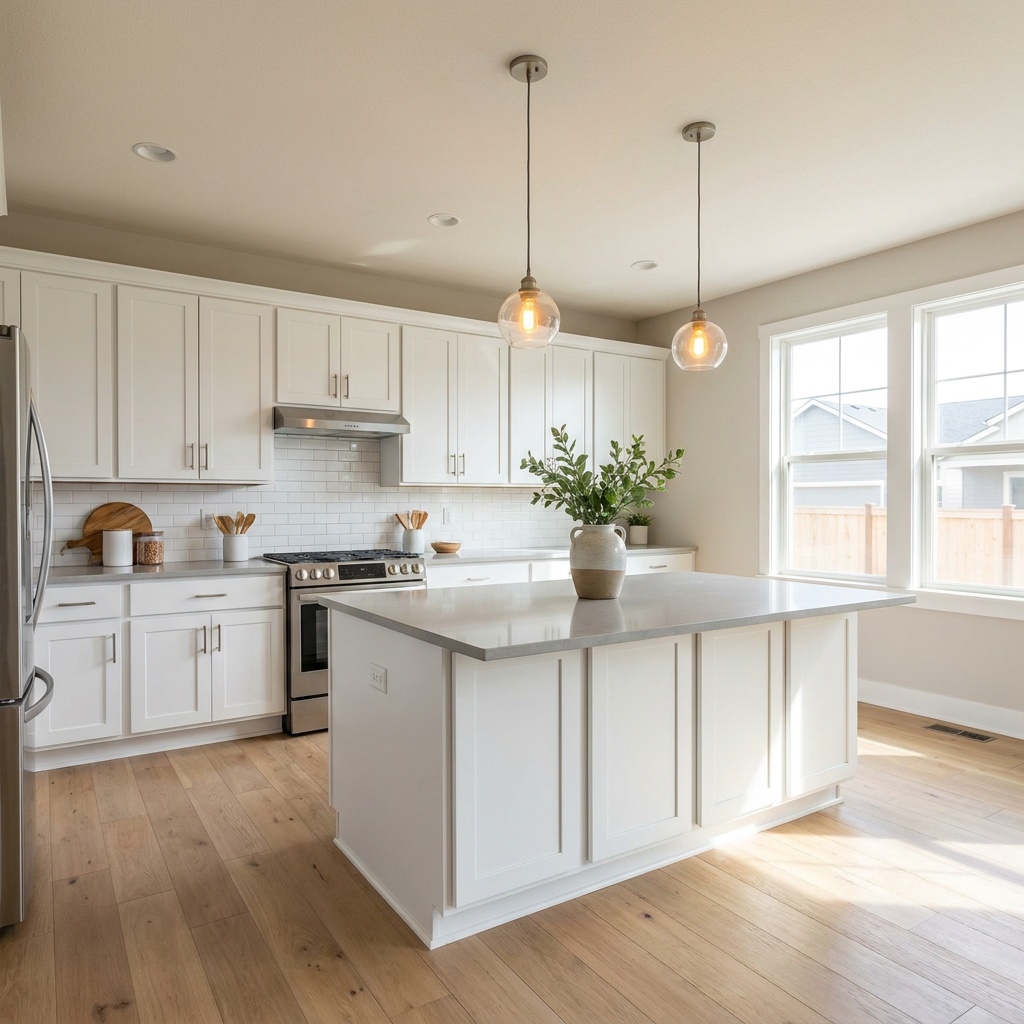
A minor, cosmetic-focused kitchen update — refaced or repainted cabinets, new hardware, a budget-friendly counter swap, mid-range appliances — tends to recoup close to what it costs in added resale value, commonly landing somewhere in the 75% to 125% range nationally, with plenty of individual projects at or above the full cost. A major midrange remodel — new cabinetry, a reworked layout, updated everything — typically recoups roughly half to a bit over half of what it costs, commonly in the 50% to 85% range. Those figures move a lot based on your home’s price point, your neighborhood’s ceiling, and exactly what you change, so treat any percentage here as a starting point for the conversation about your specific house, not a guarantee.
Why Minor Remodels Outperform Major Ones on ROI
Buyers pay for a kitchen that looks current and functions well — they generally don’t pay extra, dollar for dollar, for a fully custom build beyond what a typical buyer in that price range expects. A cosmetic refresh closes the gap between “dated” and “move-in ready” cheaply, which is exactly what shows up in a higher price at resale relative to its cost. A full gut renovation closes that same gap and then keeps going into territory (custom cabinetry, high-end appliances, structural changes) that a lot of buyers won’t pay a premium for, even if they’d enjoy it while living there. The dollars spent past that point buy comfort and enjoyment for you, not proportional resale value.
What Counts as “Minor” vs. “Major”
A minor kitchen remodel usually means: refaced or repainted cabinet boxes and doors (not full replacement), new hardware, a counter swap to laminate or a budget-friendly stone look, mid-range stainless appliances, fresh paint, and updated lighting fixtures. The layout and footprint stay the same.
A major kitchen remodel usually means: full cabinet replacement, a changed layout (moved walls, relocated plumbing or electrical), higher-end countertops and appliances, and often new flooring throughout. This is the category where cost and resale value diverge the most.
When ROI Isn’t the Right Question
If you’re planning to stay in the home for another decade or more, day-to-day livability arguably matters more than the resale-recoup percentage — you’ll get years of use out of a better layout, more storage, and appliances that actually work well before resale ever enters the picture. In Atlanta’s stronger neighborhoods, the local price ceiling also plays a real role: a kitchen remodel that outpaces what comparable homes on the street are selling for tends to underperform on ROI regardless of how well it’s done, simply because appraisers and buyers benchmark against the neighborhood, not against your receipts.
What Actually Moves the Needle on Resale Value
Within either scope, a few choices consistently correlate with stronger resale performance: neutral, timeless finishes over highly personalized ones (a bold accent color you love may read as a project to a buyer); a functional layout with adequate counter and storage space over square footage alone; updated lighting and hardware, which are inexpensive relative to the visual lift they provide; and appliances that at least look current, even if they’re mid-range rather than professional-grade.

Overpersonalizing is the most common way a kitchen remodel underperforms on ROI — highly specific tile choices, unusual layouts built around one household’s exact habits, or finishes tied to a trend that’s already fading by the time you sell.
Getting a Realistic Number for Your Home
National and regional averages are a useful starting point, but your actual recoup depends on your home’s current condition, your neighborhood’s price range, and what specifically you change — two houses on the same street can see meaningfully different returns from the same remodel. If you want a sense of what a project would cost for your kitchen specifically, our kitchen remodel cost guide breaks down pricing by scope, and a consultation can translate that into a realistic resale-value estimate for your particular home.
FAQ
Does a full kitchen remodel pay for itself when you sell?
Not usually, at least not dollar for dollar. Major midrange kitchen remodels typically recoup roughly half to a little over half of their cost in added resale value. That doesn’t mean it’s a bad investment — the rest of the value is the years of improved daily use you get from it — but it’s worth going in with a realistic number rather than expecting a full payback.
What’s the ROI difference between a minor and major kitchen remodel?
Minor, cosmetic-focused updates (refacing, hardware, a counter swap, paint) tend to recoup a much higher share of their cost, commonly 75% to 125%, than major remodels with new cabinetry and layout changes, which more often land in the 50% to 85% range. The gap comes down to diminishing returns: buyers pay well for “looks current and works,” less for “fully custom.”
Do neutral finishes really matter for resale value?
Yes, more than most homeowners expect. Bold or highly specific choices can make a kitchen feel more “finished” to you while reading as a future project to a buyer, which shows up as a lower offer or a longer time on market. Neutral doesn’t have to mean plain — it means choices that read as broadly appealing rather than personal.
Is a kitchen remodel worth it if I’m not selling soon?
Often, yes, independent of resale math. If you’ll be in the home for years, the value of a kitchen that actually works for how you cook and live is real even if it wouldn’t fully show up in a future appraisal. Resale ROI matters most when a sale is on a foreseeable horizon.
Curious what a remodel would actually cost — and roughly return — for your kitchen? Book a consultation or call 404-640-2361 and we’ll walk through the numbers for your specific home.