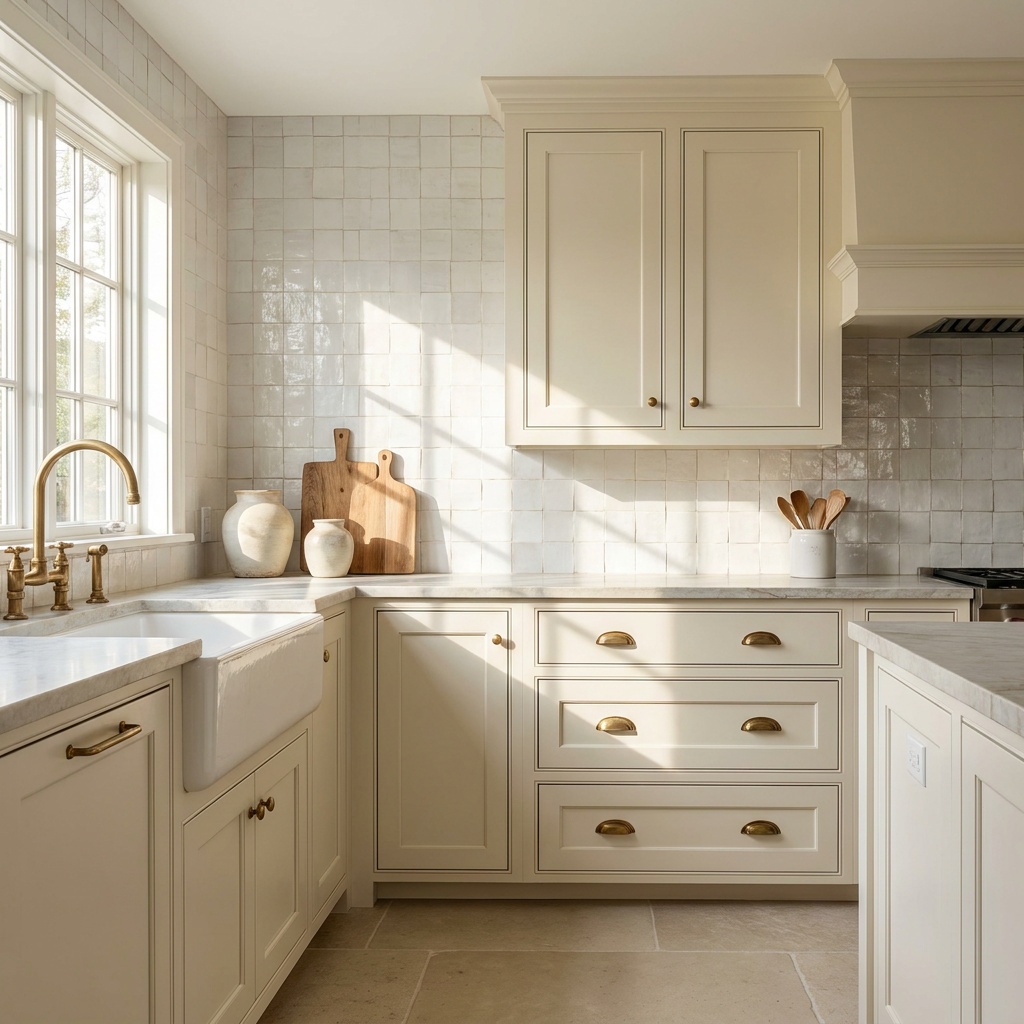
Zellige is a glazed terracotta tile, hand-shaped and hand-cut in Fez, Morocco, then fired twice — which is why no two pieces are identical. In North Atlanta kitchens and baths, authentic zellige runs roughly $15 to $30 per square foot for the tile alone, and roughly $40 to $70 per square foot installed once you account for the slower, more exacting labor it demands. Machine-made zellige-look ceramic lands closer to $8 to $12 per square foot for material. A typical 25 to 35 square foot backsplash therefore tends to land somewhere between $1,200 and $2,500 installed. Treat those as planning ranges, not a quote — your final price depends on your kitchen’s layout, the wall area involved, the tile and grout you choose, and how much cutting the run requires. Plan on ordering 15% to 20% extra, a longer install than a standard tile, and real variation in color, thickness, and edge. That variation is the product, not a defect.
What Zellige Actually Is
Zellige (pronounced zuh-leej) is a glazed terracotta tile made from clay dug near Fez, Morocco, using a process that goes back roughly a thousand years. The clay is shaped by hand, dried, glazed with mineral oxides, and fired — with the best of it fired twice for strength. Each piece is then hand-chiseled to size, which is where the signature irregular edge comes from.
Because every step is done by hand, the finished tile carries the record of that hand. Thickness varies across a single box. Edges sit slightly out of square. The glaze pools thicker in some spots than others, so a wall of one color reads as a dozen shades depending on the light. Fine surface crazing — a web of hairline lines in the glaze — is normal in any authentic order.
The most common sizes for kitchen and bath work are the 4×4 square, the 2×2 square, and the 2×6 bejmat — a narrow brick shape often laid herringbone or stacked. Colors run from weathered whites and warm ivories through ambers, greens, and deep blues.
Why the Imperfection Is the Point
Homeowners who love zellige and homeowners who regret it are reacting to the same thing. Machine-made tile is designed to disappear into a flat, even field. Zellige does the opposite: the surface is faintly undulating, so it catches and scatters light the way old hand-blown glass does. Under a window or undercabinet lighting, a zellige backsplash changes through the day. A uniform tile holds still.
That is the whole argument for it. If you want a backsplash that reads as one clean, even plane, a precision-made tile will do that better and cost less. If you want depth and movement — the quality people describe as looking like it has always been there — the irregularity is what produces it.
Where this goes wrong is expectation. An authentic order commonly arrives with roughly 15% to 20% of pieces carrying visible character: hairline crazing, edge chips, small pits, occasional spots where the glaze thins enough to show the clay body underneath. A supplier will not replace those, because they are characteristic of the product. Homeowners who know that going in are almost always happy with the result.
What Zellige Costs
Material is only part of the number. Labor is the slower part: because every tile has a slightly different thickness and edge, each piece gets adjusted individually rather than set on plastic spacers. That commonly adds 30% to 50% to backsplash labor versus a uniform tile of the same size, and more when the layout involves many cuts around outlets, windows, or a range hood.
| Authentic zellige | Zellige-look ceramic | Standard glazed ceramic | |
|---|---|---|---|
| Material, per sq ft | $15–$30 (can exceed $50 for specialty colors and shapes) | $8–$12 | $3–$8 |
| Installed, per sq ft | $40–$70 | $25–$40 | $18–$32 |
| Overage to order | 15–20% minimum; 20–30% if you want your installer to cherry-pick | 10% | 10% |
| Consistency | Intentionally variable in color, thickness, and edge | Printed variation, uniform body | Uniform |
| Install difficulty | High — needs an installer who has done it before | Standard | Standard |
| Best use | Backsplashes, shower and tub surrounds, feature walls, fireplace faces | Same look on a tighter budget | High-traffic, high-cut, or budget-driven areas |
Every figure above is a 2026 North Atlanta planning range, not a fixed price — your project depends on its layout, square footage, tile selection, substrate condition, and detail work. For how a backsplash fits a whole-project budget, our kitchen remodel cost guide breaks pricing down by scope, and the bathroom cost guide does the same for baths.
Where Zellige Works — and Where It Asks More of You
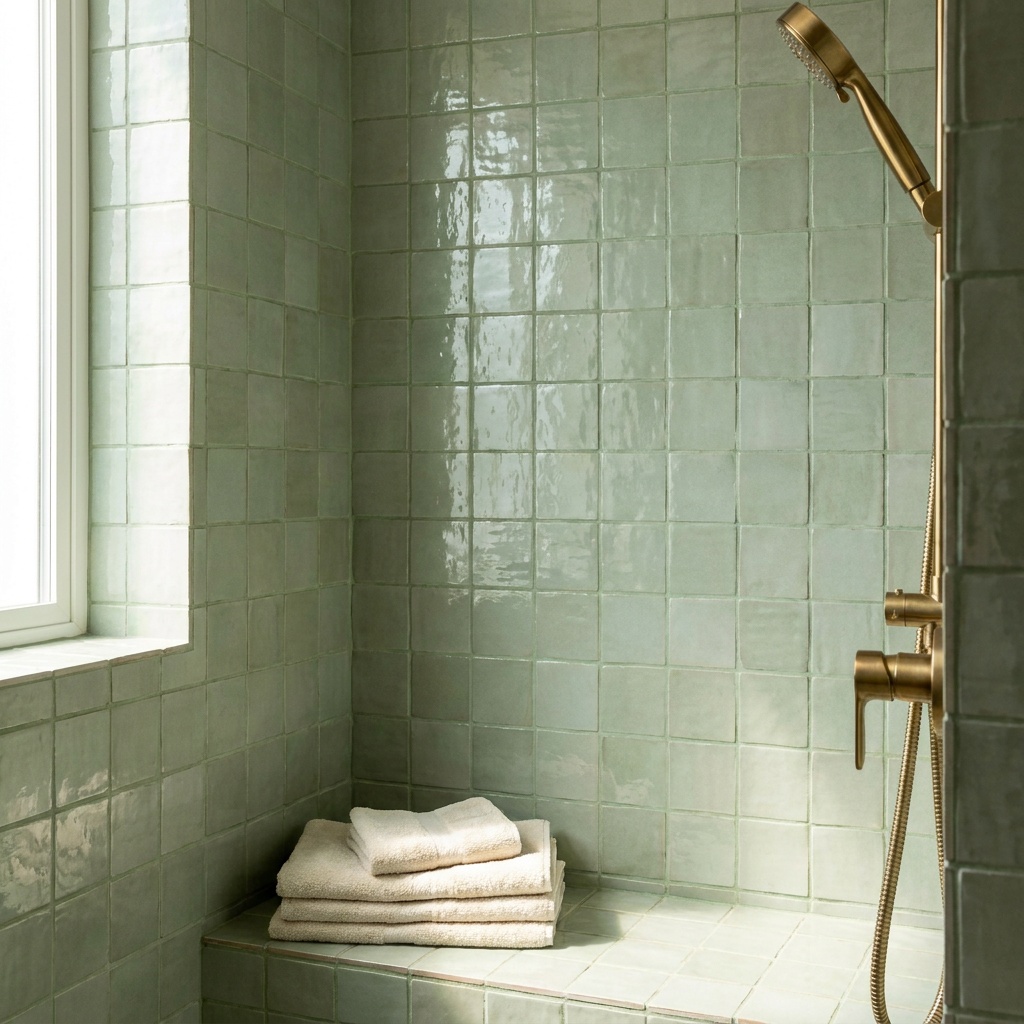
Zellige is at its best on vertical surfaces seen up close and lit from the side. Kitchen backsplashes — especially the full run from counter to the underside of the uppers — are the most common use in the homes we work in around Alpharetta, Milton, and Johns Creek. Shower and tub surrounds come second. Fireplace faces, powder-room walls, and range niches work for the same reason: seen, not scrubbed hard, with light raking across them.
Glazed zellige is water-resistant, so wet areas are fair game — with two caveats. Waterproofing behind the tile still does all the real work, whatever goes on top of it. And in a shower the joints matter more than the tile: tight, well-packed joints in a color close to the tile keep the field reading as one surface.
Floors are the harder case. Zellige can be used underfoot, but it needs a wider grout joint for slip resistance, it shows wear sooner than a porcelain made for the purpose, and the thickness variation that is charming on a wall becomes something you feel. For most households, it belongs on the wall and something more forgiving belongs on the floor.
Installation: What Separates a Good Zellige Job From a Bad One
This is the part worth reading twice, because zellige punishes a rushed install more than almost any other tile.
Order early, and order extra
Zellige is made and shipped in batches, and lead times can run weeks. Order at least 15% to 20% over your measured square footage — 20% to 30% if you want pieces set aside. A mid-install reorder rarely matches the original batch, and it stalls the schedule.
Blend from multiple boxes
Color varies box to box. A good installer opens several at once and pulls from all of them as the wall goes up, so shade variation distributes evenly instead of banding across the field.
Dry-lay before anything is set
Laying out a section on the floor first sorts out thickness outliers, places the most characterful pieces deliberately, and confirms the pattern before mortar is involved.
Tight joints, matched grout
Zellige is traditionally set edge to edge or with a joint around 1/16 inch, held with wedge spacers rather than plastic crosses. Grout close to the tile color makes the joint nearly disappear. A contrasting grout draws a hard line around every irregular edge — a legitimate look, but a deliberate choice rather than something to discover after grouting.
Manage lippage on purpose
Some height difference between adjacent tiles is inherent. A skilled installer keeps it minimal and consistent, backbuttering to bring thin pieces flush and softening sharp proud edges with a rubbing stone after grout. Lippage that looks intentional reads as texture; lippage that varies at random reads as a mistake.
Budget more days
A backsplash that takes one day in a uniform tile can take two to three in zellige. Building that into the schedule up front keeps it from becoming a change order later.
The most useful thing you can do is confirm your installer has set zellige before. It is not exotic work, but it is different work, and the difference shows on the wall for the next twenty years.
Living With Zellige
Day to day, glazed zellige asks very little: warm water and mild soap. What shortens its life is aggressive cleaning — acidic or abrasive products dull the glaze, and once that surface is compromised the tile stains far more easily. Behind a range, wipe grease while it is fresh.
Glazed zellige on a wall does not need sealing. Unglazed or heavily crazed pieces in a wet area are the exception, and that is a call to make with your installer for the specific tile. Grout is the more common maintenance point, and it is worth spending a little more on than most people expect.
Is Zellige Right for Your Project?
It comes down to two questions. Are you drawn to the movement of a handmade surface, or to a clean, even field? And is there room in the budget for both the material and the slower labor? If the answer to both is yes, zellige is one of the few finishes that still looks considered a decade later — it was never trend-shaped to begin with.
If the budget is tight but the look matters, a zellige-look ceramic is an honest middle path: it will not shift with the light the way handmade tile does, but it installs on a normal schedule at a lower cost. That trade-off belongs on the table before the tile is ordered. We work through decisions like this at the design table with real pricing attached — see how we work.
Frequently Asked Questions
How much does a zellige tile backsplash cost?
In North Atlanta, authentic zellige typically runs about $15 to $30 per square foot for material and roughly $40 to $70 per square foot installed, which puts a standard 25 to 35 square foot backsplash somewhere around $1,200 to $2,500. Zellige-look ceramic runs meaningfully less. These are planning ranges rather than a quote — your final price depends on your kitchen’s layout, wall area, tile selection, and how much cutting the installation requires.
Why does zellige tile have chips and cracks in it?
Because it is shaped, cut, and glazed by hand and fired twice, roughly 15% to 20% of any authentic order arrives with visible character: hairline crazing in the glaze, small edge chips, pits, or spots where the glaze thins. Suppliers do not treat these as defects, because they are the direct result of the traditional process. Ordering 20% to 30% overage lets your installer place or set aside pieces as the wall goes up.
Can zellige tile be used in a shower?
Yes. Glazed zellige is water-resistant and is widely used on shower and tub surrounds. Two things determine whether it holds up: proper waterproofing behind the tile, which does the real work regardless of the finish, and tight, well-packed grout joints in a color close to the tile. Zellige on a shower floor is a different question — a wider joint is needed for slip resistance, and a porcelain made for floors is usually the better choice underfoot.
Does zellige tile need to be sealed?
Glazed zellige on a wall generally does not need sealing — the glaze is the protective layer. Unglazed tile, or heavily crazed pieces going into a constantly wet area, is the exception, and that call is best made with your installer for the specific tile you have chosen. The grout is the more important maintenance point. Day to day, clean with warm water and mild soap; acidic and abrasive cleaners will dull the glaze over time.
How much extra zellige tile should I order?
Order at least 15% to 20% over your measured square footage, and 20% to 30% if you want your installer to cherry-pick pieces for the most visible runs. Zellige is made in batches, so a mid-install reorder often will not match the color of the original shipment and can stall the schedule by weeks. Buying the overage up front is almost always cheaper than a second shipment.
Thinking about zellige for your kitchen or bath? Book a consultation or call 404-640-2361, and we will price the tile, the labor, and the schedule honestly before anything is ordered.